
On a busy morning, a teammate mentions a stain near the break room hallway.
In the access panel, you find a pinhole leak soaking insulation and dripping toward an electrical run. Further investigation reveals the leak has been building for days.
Why did it go unnoticed? Because that area wasn’t part of the routine checks.
This is exactly how most plumbing issues start. When loose fittings and pressure fluctuations go unnoticed, you end up with a costly repair.
To avoid this, you need a plumbing inspection checklist that helps you catch problems early, maintain consistent documentation, and minimize unplanned downtime.
In this guide, we share a customizable checklist that you can use on its own or with a CMMS.
Key takeaways
- Regular inspections are the best way to catch leaks, blockages, pressure issues, and equipment failures before they lead to water damage or downtime.
- A commercial plumbing inspection should include checks for pipes, fittings, drains, valves, fixtures, heaters, boilers, backflow devices, and sewer systems.
- A CMMS makes it easier to implement the checklist, document findings, attach photos, and stay compliant.
- Collecting data with a CMMS during maintenance and inspections helps you predict failures and improve your preventive maintenance program over time.
How to use this checklist
Before you call in your technicians to start checking off tasks, here’s what you need to know.
Customizing your checklist
Every facility’s plumbing layout is a little different, so treat this checklist as a starting point. Add or remove line items as necessary.
You may need to make extra changes based on industry requirements. For example, food facilities need more rigorous backflow testing. So if your building has three commercial kitchens, you may want to add extra checks related to heat-exposed cross-linked polyethylene (PEX) lines or dishwasher supply valves.
Using a CMMS
Running this checklist within a computerized maintenance management system (CMMS) has several benefits. With a CMMS, you can:
- Digitally assign checklist tasks to technicians with due dates
- Add photos of leaks or pressure-gauge readings
- Track recurring issues
- Automatically generate work orders when a technician flags a problem
- Standardize inspections across multiple buildings or teams


What should be included in a commercial plumbing inspection?
Your commercial plumbing inspection checklist needs to cover the areas listed below. We’ve also included example tasks within each area that you can use as a starting point.
Pipes and fittings
Drains and traps
Valves and shut-offs
Water heaters and boilers
Backflow prevention devices
Fixtures and appliances
Water pressure and flow
Sewer and vent systems
*Disclaimer: This checklist is to be used only by those with appropriate training, expertise, and professional judgment. You are solely responsible for reviewing this checklist to ensure that it meets all professional standards and legal requirements, as well as your needs and intent.
Preventive maintenance best practices for plumbing systems
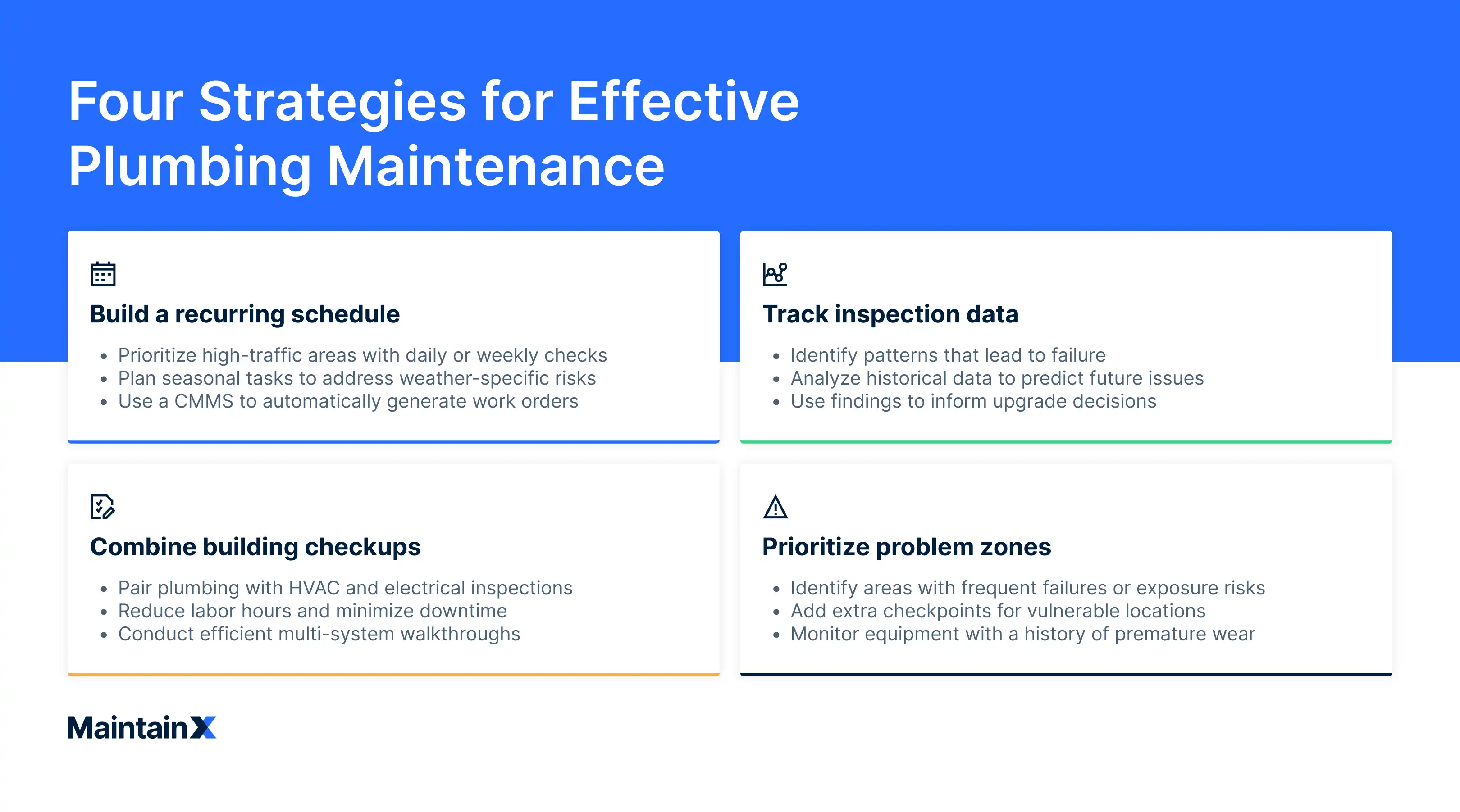
Preventive maintenance requires a repeatable routine that helps you identify issues before they lead to safety hazards or expensive repairs. In addition to our checklist, here are some strategies you should consider for preventive plumbing maintenance:
- Build a recurring inspection schedule: Choose the right frequency for each task. High-traffic restrooms and kitchens may require daily or weekly checks, but it’s okay to check the water fountain at the end of each quarter. You’ll also need to perform seasonal maintenance: Check insulation on exposed pipes and heater performance before winter, and check expansion tanks and cooling tower supply lines before summer. Once you define the desired frequency in your CMMS, it will automatically create a work order as per the schedule.
- Track inspection data: You’ll see patterns emerge in your maintenance data over time. For example, you might notice frequent pressure drops on certain floors, or recurring PRV failures. Use this data and see if a permanent fix makes sense.
- Pair plumbing inspections with other building checkups: Instead of conducting separate walkthroughs, combine plumbing inspections with HVAC, electrical, safety, or other building inspections. This saves labor hours and reduces planned downtime.
- Prioritize known problem zones: Some areas typically fail first. For example, floor drains near loading docks, old copper branches on upper floors, pipes near heat-producing equipment, or lines exposed to freezing temperatures are more prone to wear and damage, so it makes sense to build extra checkpoints for these.

Purchase Order vs Work Order: How Do They Differ?
While a work order authorizes the specific type and scope of a job to be performed, a purchase order authorizes the buying of items and services needed for the work.
Documentation and record-keeping best practices
Detailed documentation is the most reliable way to understand how your building’s systems behave over time. It’s also required to prove compliance with local plumbing codes, health and safety requirements, and other applicable regulations. Follow these best practices to make sure you’re documenting plumbing maintenance and inspections effectively:
- Maintain inspection logs for every plumbing asset: Record what was inspected, by whom, when, and what was found. Include the fixture ID, location, readings (pressure, flow, etc.), and photos of any leaks or corrosion.
- Maintain a running maintenance history: A maintenance history that includes details about past repairs and replacements can help you identify recurring problems and inform decisions about retrofits or system upgrades.
- Attach photos or videos with records: Visual records help your team compare between inspections and explain issues to vendors or safety teams.
- Document manufacturer specifications and SOPs: Store manuals, warranty details, installation documents, and standard operating procedures (SOPs) so they’re easily accessible when needed.
- Use a CMMS: Make documentation easier with a CMMS. A CMMS tracks inspections and maintenance tasks, automatically creating an audit trail that provides all the details you need to make data-backed decisions.
Digitize your plumbing inspection checklists
Digitizing inspections and checklists gives your team a single source of truth: Every inspection, photo, reading, and work order is accessible in one place, and nothing gets lost in the shuffle.
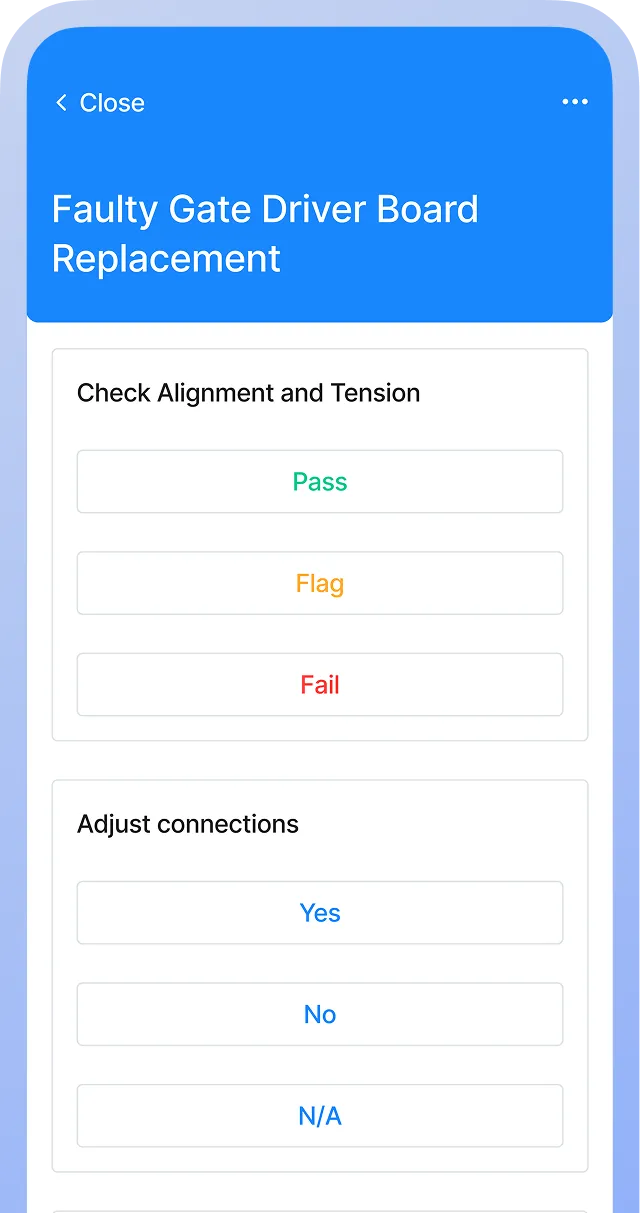
MaintainX can turn your plumbing inspection checklist into a repeatable, mobile-friendly process. Technicians can record findings, attach photos, log pressure readings, and create work orders instantly from a mobile device.
The result? Faster inspections, reduced downtime, and an automated audit trail.
If you’re ready to start running regular plumbing inspections, book a demo to learn how MaintainX can simplify the process.
Plumbing Inspection Checklist FAQs
What is the purpose of a plumbing inspection?
A plumbing inspection is performed to identify leaks, pressure issues, blockages, corrosion, and equipment failures early. The goal is to prevent downtime and water damage.
What should I include in a plumbing inspection checklist?
The specific tasks to include in your plumbing checklist depend on your layout and equipment. In general, the inspection should include checks for pipes, fittings, drains, traps, valves, shut-offs, water heaters, boilers, backflow devices, flow rates, and pressure levels.
How often should a commercial building have its plumbing inspected?
Most commercial buildings require monthly or quarterly plumbing inspections, as well as a more comprehensive annual inspection. But you may choose to inspect high-use areas more frequently.
What are the most common plumbing issues found during inspections?
The most common issues include leaks, corrosion, clogged drains, weak water pressure, faulty valves, faulty PRVs, and sewer odors caused by vent or trap issues.
Do I need a licensed plumber to perform inspections?
Your in-house maintenance team can handle basic inspections, but you may need a licensed plumber for backflow testing and code-regulated work like installing water supply lines or water heater installation.
How can I prepare for a plumbing inspection?
To prepare for a plumbing inspection, start by clearing access to valves, mechanical rooms, fixtures, and drains. Next, gather past maintenance records and list known issues. Finally, notify staff if the water supply may be temporarily interrupted.
Can I use this checklist without a CMMS?
Yes, you can download the checklist as a PDF. However, the checklist is much easier to implement with a CMMS because it ensures that all inspections and maintenance work are documented and consistent.

The MaintainX team is made up of maintenance and manufacturing experts. They’re here to share industry knowledge, explain product features, and help workers get more done with MaintainX!


.webp)