
Without a structured car wash maintenance checklist, essential inspection and upkeep tasks can easily slip through the cracks, leading to operational slowdowns and non-compliance with OSHA, EPA, or NFPA standards. In contrast, an in-depth checklist protects equipment uptime and helps operators to create audit-ready documentation over time.
This guide includes a downloadable checklist for car wash maintenance and regulatory readiness, as well as some general tips for keeping your facility working its best.
Key takeaways
- Preventative car wash maintenance and scheduled inspections help prevent equipment downtime and reduce repair costs.
- A comprehensive car wash maintenance checklist should include daily safety checks, weekly deep cleaning, and monthly component inspections to protect all aspects of the equipment.
- A preventive maintenance checklist is key to documenting repairs and achieving compliance with OSHA, EPA, and NFPA standards.
- Using a computerized maintenance management system (CMMS) to track car wash maintenance standardizes inspection frequencies and helps you build audit-ready logs.
How to use this checklist
Customize for your facility
Adapt this checklist based on your car wash operation type, customer volume, and equipment. Self-service operations might focus more on coin mechanisms and bay upkeep, while full-service car wash tunnels need detailed conveyor and dryer inspections.
Consider your local water discharge regulations when setting wastewater inspection frequencies. Some municipalities require weekly monitoring, while others require monthly inspections. Adjust chemical handling procedures to match your specific product lineup and manufacturer recommendations.
Use a CMMS
Upload this checklist to a CMMS to automate inspection schedules and create central, streamlined audit trails for regulatory compliance. A CMMS enables technicians to log findings from mobile devices during rounds, capture photos of equipment wear, and trigger work orders when issues appear. This approach makes documentation easier and more efficient, reducing paperwork and ensuring maintenance history stays accessible for inspections.


Car wash maintenance checklist
Wash equipment and tunnel machinery
Water and wastewater systems
Chemical storage and dispensing
Electrical and control systems
Building structure and surfaces
Safety and fire protection
Site, grounds, and customer areas
Documentation and compliance
This checklist is to be used only by those with appropriate training, expertise, and professional judgment. You are solely responsible for reviewing this checklist to ensure that it meets all professional standards and legal requirements, as well as your needs and intent.
The car wash chemical safety gap most operators miss
Most car wash operators store safety data sheets and train staff on chemical handling. Far fewer operators train their team on ensuring the safety of the drains these chemicals flow into after use.
Presoak acids, degreasers, and tri-color waxes each carry specific pH and discharge limits under Clean Water Act permits. When maintenance teams swap chemical vendors or adjust dilution ratios without updating discharge documentation, the facility can risk regulatory issues.
Effective chemical management ties three elements together:
- What's stored on-site
- How it's diluted
- Where it goes after contact with vehicles
A single chemical change can affect OSHA storage requirements, EPA discharge limits, and NFPA flammability classifications at the same time.
Track chemical inventory alongside maintenance logs in a digital checklist to turn routine product swaps into documented, audit-ready decisions and mitigate hidden compliance risks.
Note: This article is for informational purposes only and does not constitute legal, regulatory, or compliance advice. Chemical discharge requirements, permits, and safety classifications vary by location and are subject to change. Consult a licensed environmental compliance professional or legal counsel to ensure your facility meets all applicable federal, state, and local regulations.
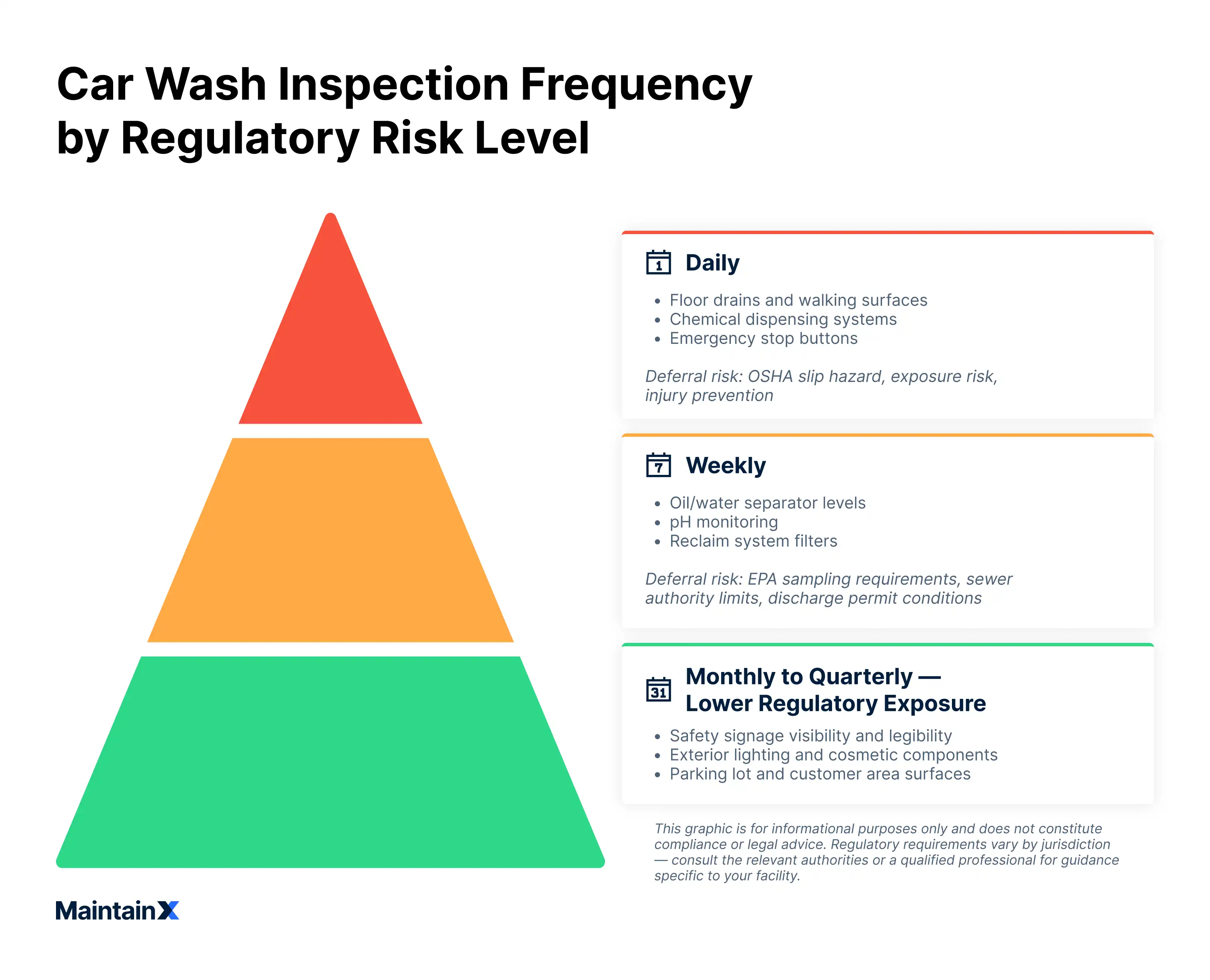
Car wash equipment inspection frequency by regulatory risk level
Different types of car wash equipment carry different regulatory risks. Inspection frequency should match these variations.
Oil/water separators, chemical storage areas, and electrical panels in wet environments typicaly carry the highest risk levels. These systems touch OSHA, EPA, and NFPA requirements simultaneously, and may require weekly or even daily checks. A neglected separator alone can lead to discharge violations, workplace safety citations, and fire code issues.
Items like reclaim tanks, vacuum systems, and ventilation fans typically warrant weekly to monthly inspection. They affect compliance, but failure patterns tend to develop more gradually.
Lower-risk equipment, such as signage, lighting, and cosmetic components, can follow monthly or quarterly schedules.
Organize maintenance procedures around regulatory exposure with a structured checklist to help teams prioritize the inspection and upkeep of areas where violations are most likely to occur.
Common car wash maintenance failures that trigger multi-agency violations
When one system in a car wash is neglected, the problems rarely stop there.
Standing water due to a clogged floor drain creates slip and fall hazards, while backed-up wastewater carrying chemicals can violate EPA discharge permits. If that water reaches an electrical panel, NFPA codes come into play as well.
Similar patterns show up with chemical storage. Improper containment triggers EPA spill-prevention violations, unlabeled containers create OSHA hazard communication issues, and storage near ignition sources draws NFPA citations.
Recognizing these overlap points helps maintenance teams prioritize the tasks that carry the greatest regulatory and financial risk. To manage risk, build inspection rhythms, document them in a digital system of record, and prevent small oversights from cascading into costly violations.
Simplify car wash preventive maintenance with a CMMS
MaintainX is a mobile-friendly CMMS that supports car wash operations by centralizing maintenance records and compliance evidence, turning one-off tasks into a repeatable workflow.
With MaintainX, technicians can tie each task to its relevant OSHA, EPA, or NFPA standard for clear records of compliance. Completed inspections generate timestamped records with photos and notes, creating the documentation trail inspectors look for during audits.
Keep your car wash business operation-ready and document evidence of compliance in a single platform with MaintainX. Book a tour today.
Carwash maintenance checklist FAQs
What are the NPDES permit requirements for car wash wastewater discharge?
NPDES permits limit what you can discharge to storm drains or surface waters. Most commercial car washes need oil/water separators, regular effluent sampling, chemical discharge monitoring, and documented maintenance records. Requirements vary by state, so check local EPA regulations for specific thresholds.
Note: This is a general informational summary only and does not constitute legal, regulatory, or compliance advice. Consult a qualified contractor or legal counsel to determine the specific obligations applicable to your jurisdiction and equipment.
What safety equipment must be maintained at a car wash facility?
Essential car wash safety equipment includes emergency eyewash stations, chemical spill kits, fire extinguishers, first aid supplies, and ventilation systems. OSHA also requires PPE for chemical handling, lockout/tagout devices for equipment maintenance, and clearly marked emergency exits.
How do you maintain a car wash water reclamation system?
Establish a maintenance schedule by checking reclaim tanks daily for sediment buildup and odor, and cleaning filters weekly. Inspect pumps for correct pressure and test water quality on-site every day. You should also document pH levels and chemical dosing rates, as these records help to prove compliance during EPA audits.
What are the most common car wash equipment failures and how can they be prevented?
Pump failures, conveyor chain wear, and chemical injector issues are the most common car wash system failures. Prevent them through daily visual checks, weekly lubrication schedules, and ongoing water filtration. Most failures stem from neglected routine maintenance rather than equipment age.
What should be included in a daily car wash opening checklist?
Start with water system checks: reclaim tanks, chemical levels, and pressure gauges. Test conveyor movement and safety stops. Verify drains are clear, inspect chemical feed systems, and confirm all safety equipment is accessible. Document any abnormalities like conveyor belt issues or water system failures immediately.
How long does car wash equipment typically last with proper preventative maintenance?
Conveyors typically last 15–20 years, while pumps and motors should run for 10–15 years with consistent care. High-pressure equipment may need replacement every 7–10 years. Documented preventive maintenance extends these lifespans and helps support warranty claims.

The MaintainX team is made up of maintenance and manufacturing experts. They’re here to share industry knowledge, explain product features, and help workers get more done with MaintainX!


.webp)