
Autonomous Maintenance Management Software
Operator-assisted maintenance that drives uptime
With MaintainX, machine operators can use guided checklists to complete routine tasks, add to audit logs, and flag equipment issues so you can hit production targets quickly and safely.









Our clients using MaintainX report
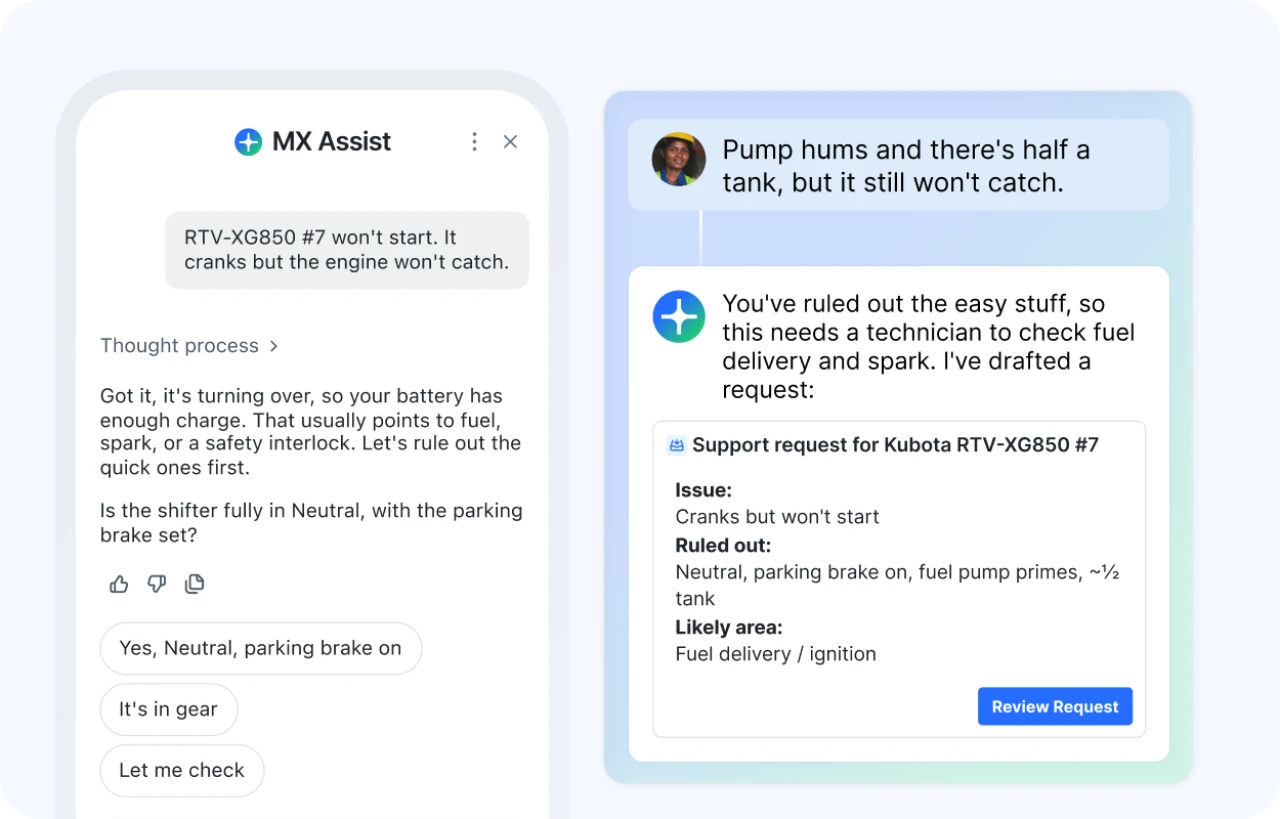
Use an AI assistant to help operators fix simple issues without waiting on maintenance
Instantly surface instructions and troubleshooting help from asset manuals so operators can safely do quick inspections, complete repairs, and keep simple issues from stopping production.
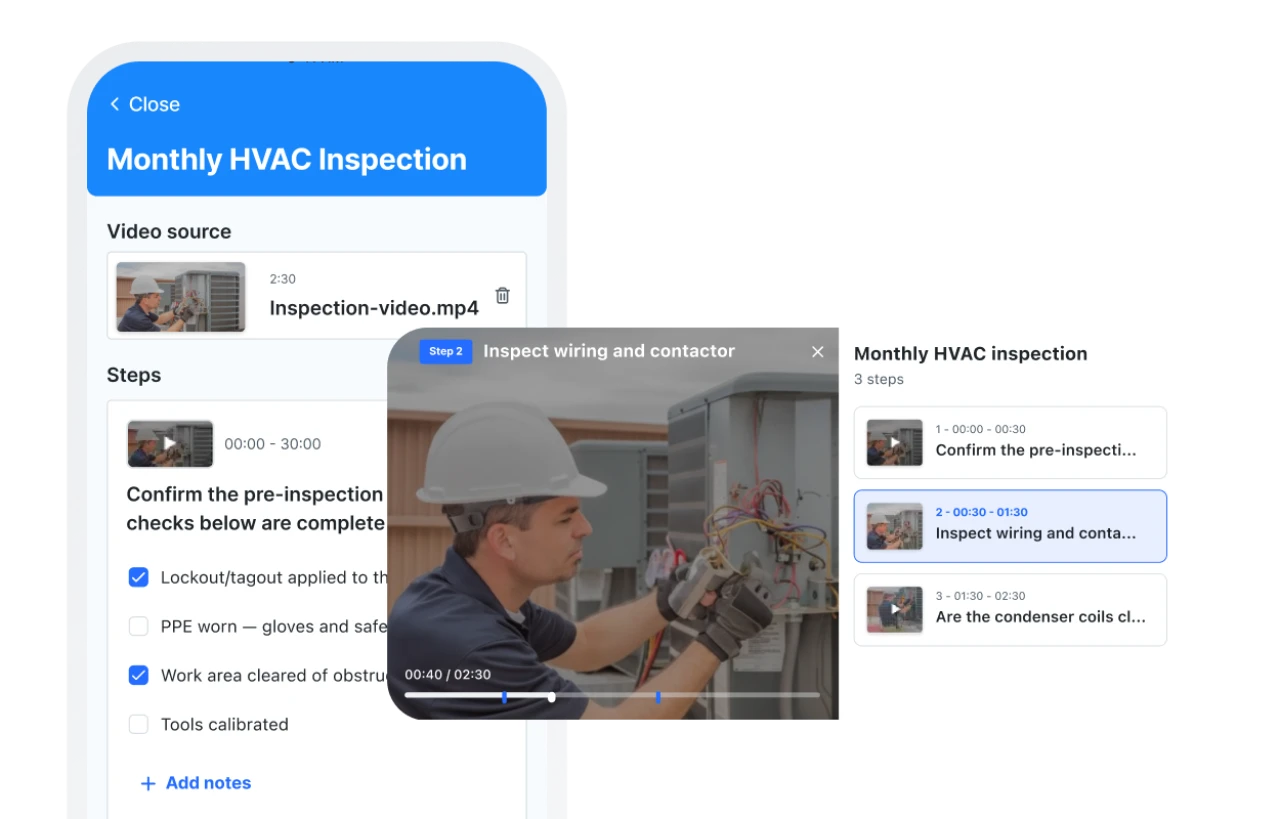
Create step-by-step video procedures to help operators complete routine maintenance
Technicians can record themselves doing a job, then use AI to turn the video into an SOP, with each step linked to a short clip, so operators see exactly how to complete each task.
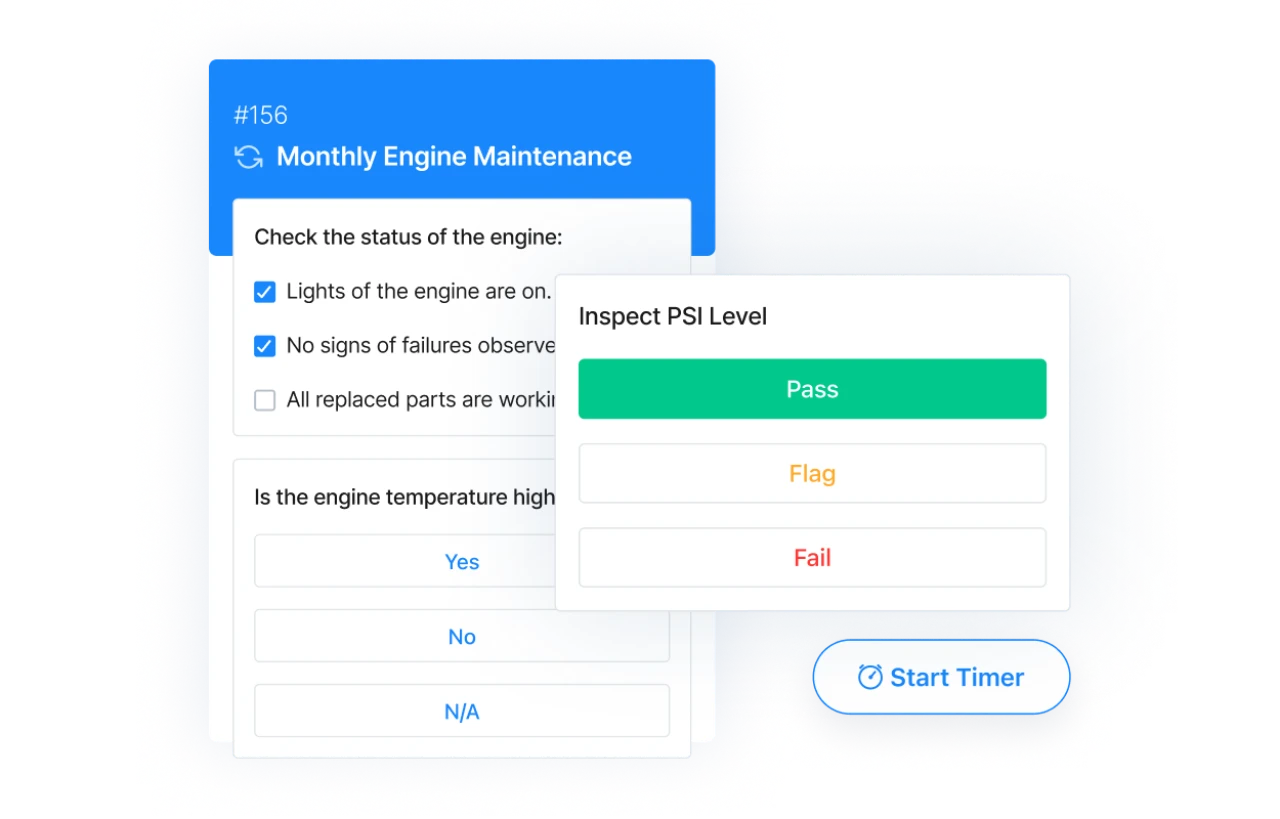
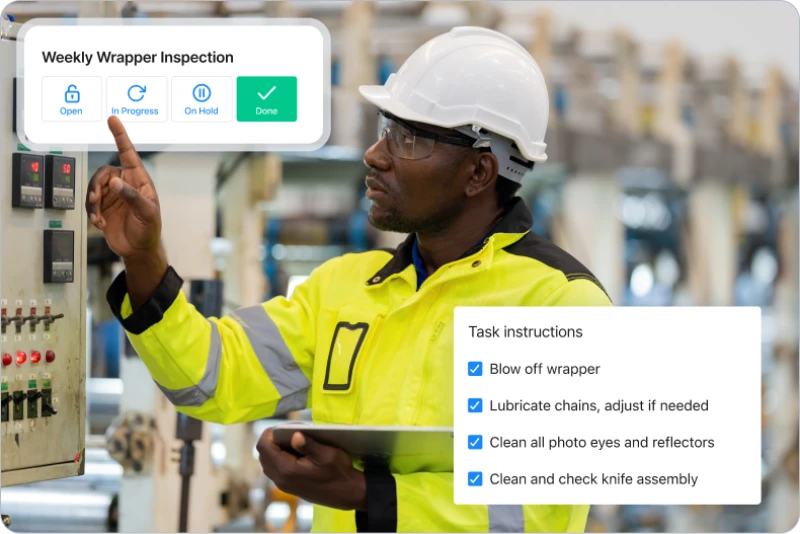
Build digital SOPs that help operators do routine tasks and free techs for work only they can do
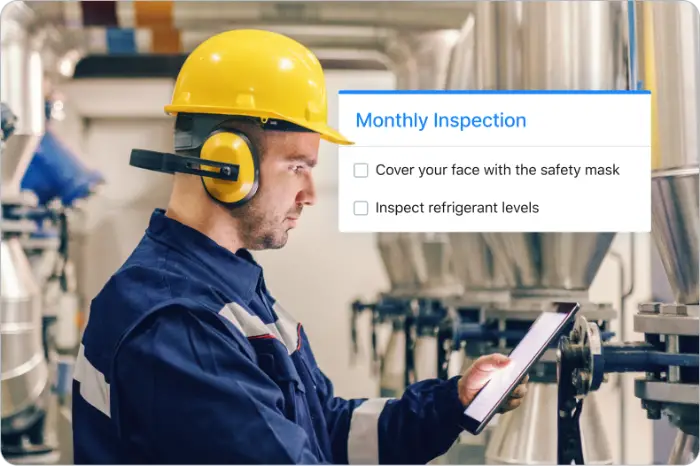
Guide machine operators through each step of maintenance using pictures, video, and an AI assistant so you can give maintenance technicians more time to do high-skill work that prevents downtime.
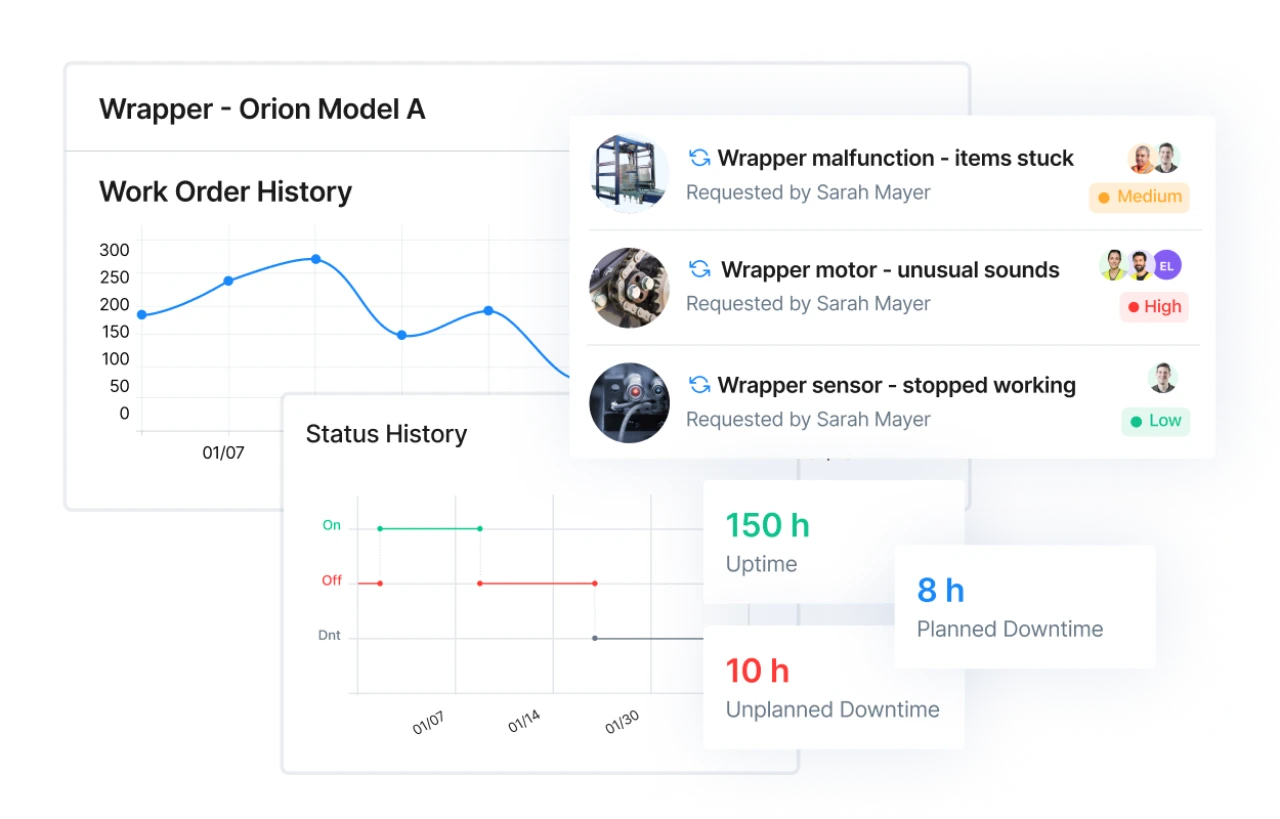
Give operators instant access to a machine’s performance and maintenance records
Repair history, scheduling work, and recent failures are automatically added to a central asset profile, so any operator, on any equipment, has the information they need to keep it running.
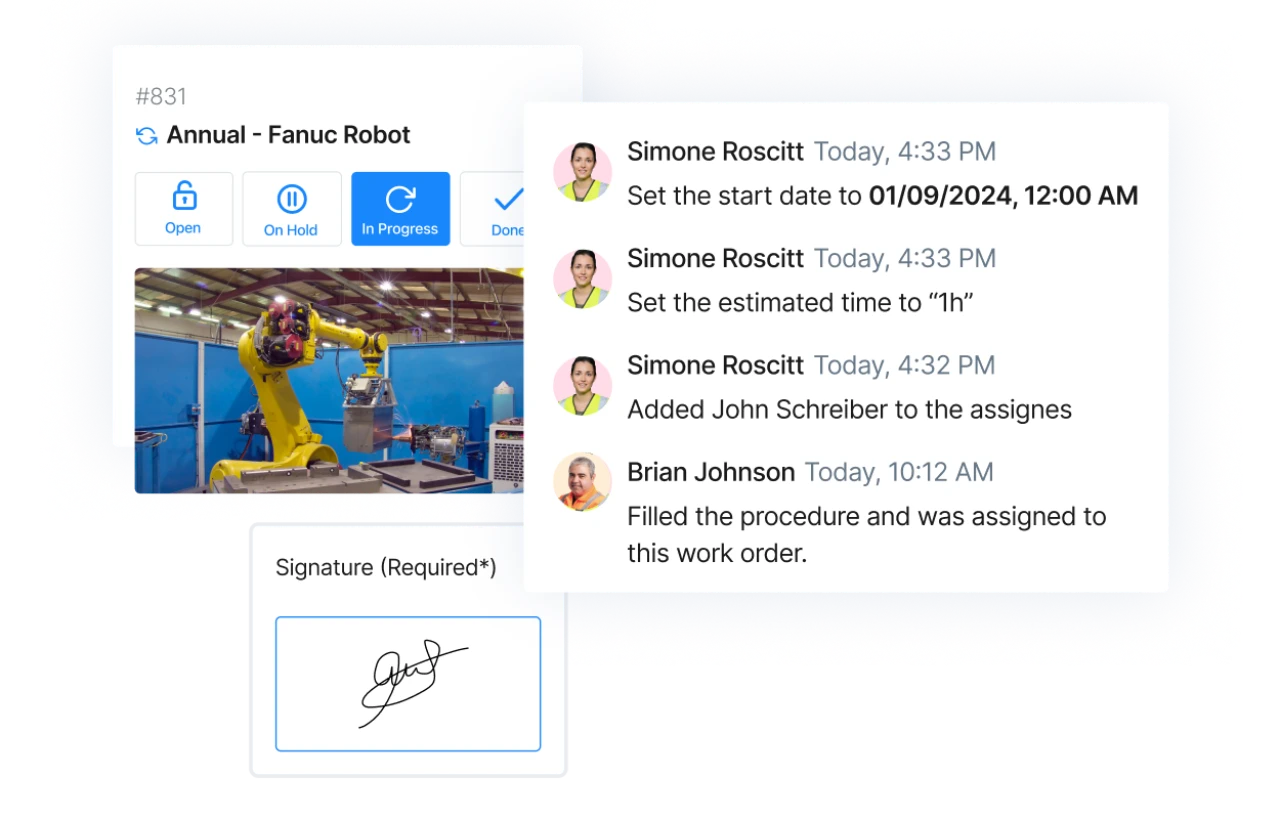
Create reliable audit trails and eliminate pencil whipping with work order templates
Add required fields, timestamps, and step-by-step approvals to your digital work orders so operators complete work the right way, with the right data, regardless of the asset or shift.
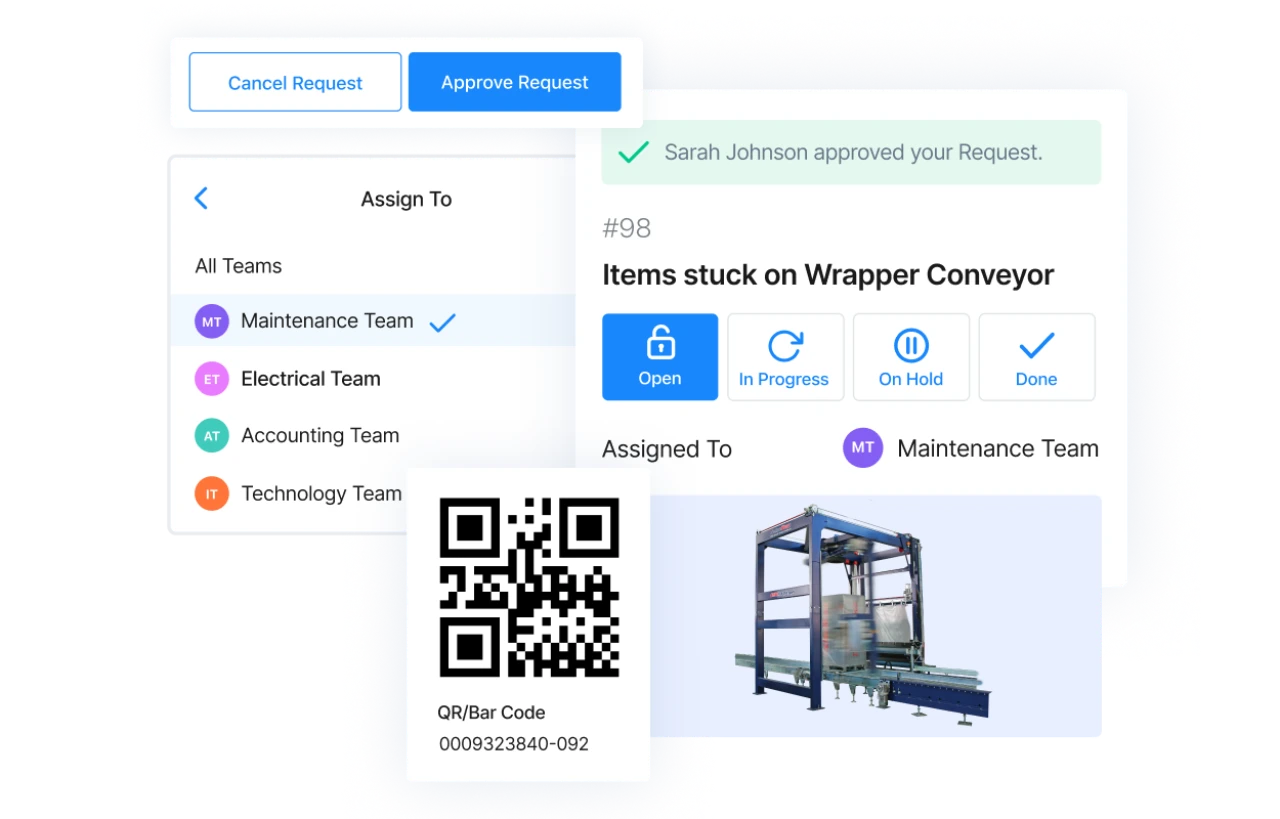
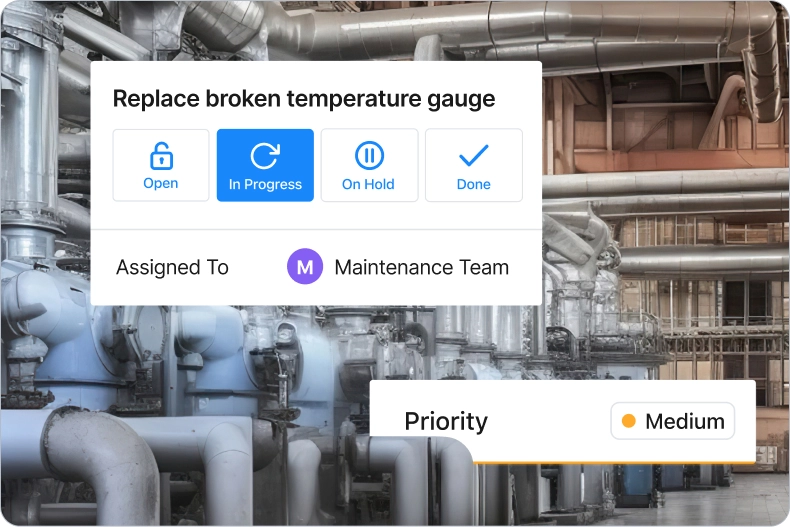
Allow anyone at your operation to submit a work request in under a minute
Set up a digital work request form anyone can access with a QR code without a MaintainX log in. Requests are automatically sent to the right team, prioritized, and turned into a work order.
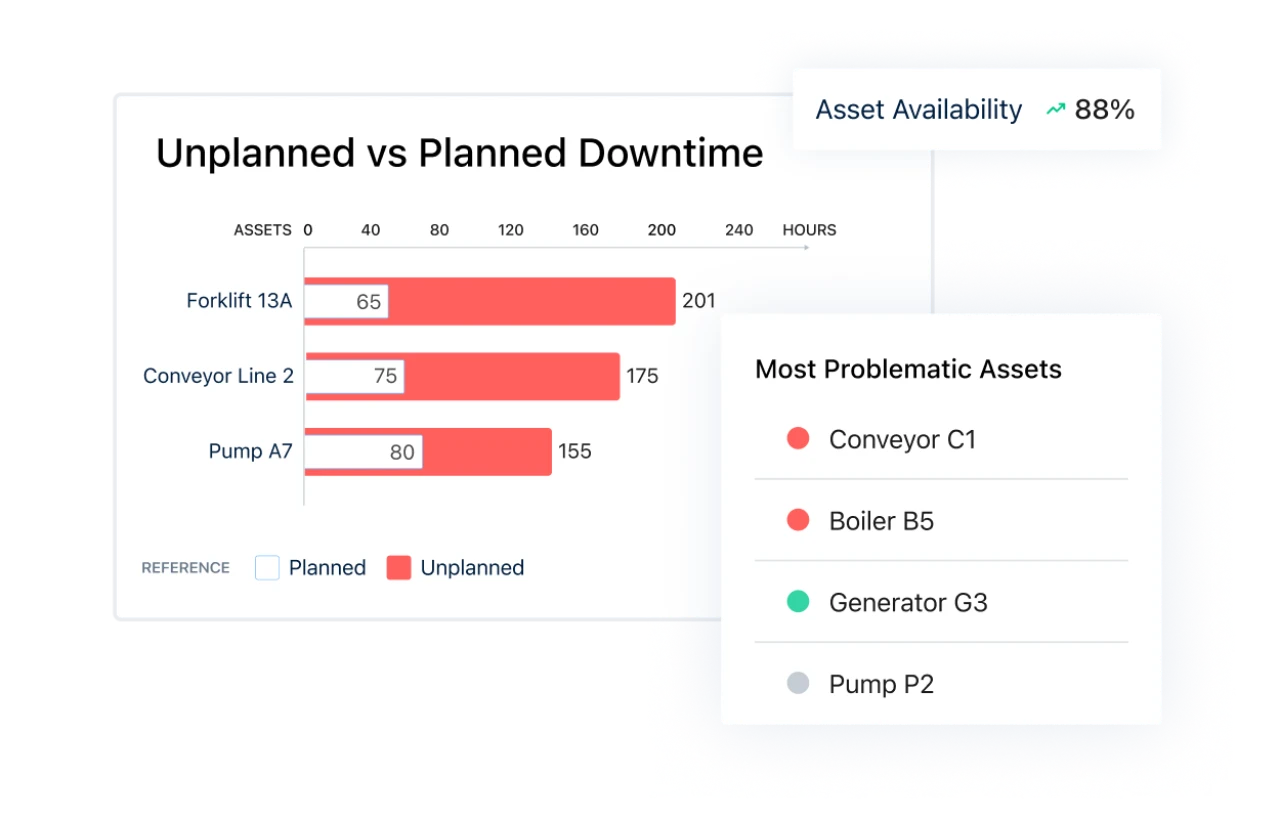
Track downtime, asset availability, and maintenance costs in a single view
Capture data on the performance of your assets, view it on out-of-the-box or custom dashboards, and ask AI to find insights you can use to improve OEE and reliability.


Award-winning software you can trust







See what customers have to say
MaintainX has changed the way we look at maintenance. Being able to create work orders and procedures…almost feels too easy.

MaintainX takes guesswork out of plant management. The…functionality across platforms is excellent.
MaintainX is the reason we have gone from an overall plant efficiency of 60% to over 95%.
Frequently asked questions
Got a question? We’ve got answers. Need troubleshooting help? Check out our Support Center.
What is autonomous maintenance?
Autonomous maintenance is a maintenance strategy that makes routine equipment maintenance the machine operators' responsibility. Operators perform minor maintenance tasks and routine upkeep, like cleaning, inspecting, and lubricating, which frees maintenance engineers and dedicated maintenance technicians to focus on complex repairs. It's a core pillar of total productive maintenance (TPM).
What are the benefits of autonomous maintenance?
The benefits of autonomous maintenance include earlier problem detection, less equipment deterioration, fewer equipment failures, and better equipment reliability. Operators who know their machines best catch small changes before they become downtime and perform basic maintenance tasks to stop breakdowns. When regular maintenance tasks are handled on the floor, maintenance teams get time back for complex tasks that support operational efficiency and operational excellence.
What maintenance tasks can operators perform?
Operators typically perform routine maintenance tasks such as cleaning, inspecting, lubricating, checking fluid levels, tightening fasteners, and logging meter readings. These are often the simple maintenance tasks that get skipped when schedules are tight, yet they sometimes matter most for maintaining equipment. Electrical diagnostics, major component replacement, and other more complex repairs stay with skilled maintenance staff.
How do you implement autonomous maintenance?
Most teams roll out an autonomous maintenance program in stages. They perform initial cleaning and inspection, address sources of contamination, document autonomous maintenance procedures, and train operators to follow them. Start with a pilot line, gather operator feedback, and expand once the process is working. Over time, operators take more ownership of their equipment.
What is the role of initial cleaning and inspection in autonomous maintenance?
Initial cleaning and inspection is the foundation of the autonomous maintenance process. When operators clean equipment thoroughly, they uncover leaks, loose parts, wear, and contamination that dirt had hidden. This first step helps increase operator knowledge, sets a baseline for optimum equipment conditions, and gives the maintenance department findings to act on.
How does autonomous maintenance differ from preventive maintenance?
Preventive maintenance is scheduled work, usually planned and performed by maintenance personnel, to prevent equipment failures. Autonomous maintenance shifts the daily basics to operators. The two work together: operators complete planned maintenance tasks every shift to prevent equipment deterioration, while maintenance teams handle scheduled preventive maintenance and the technical work operators shouldn't take on.
How do you train operators to complete maintenance tasks?
Proper training is critical to autonomous maintenance success. Trained machine operators know what to check, what normal looks like, and when to escalate. Effective programs combine hands-on coaching from maintenance engineers with standard operating procedures and one-point lessons, which are short guides focused on a single task. Digital tools can put instructions and photos right where the work happens.
What is visual maintenance management and why does it matter?
Visual maintenance management uses labels, color coding, and clear inspection points so anyone can see the proper operation and condition of equipment at a glance. It makes abnormalities obvious and keeps autonomous maintenance tasks consistent across shifts. When you standardize visual maintenance management across lines and sites, new operators get up to speed faster and guesswork drops.
How can autonomous maintenance software help my team?
Autonomous maintenance software makes operator-led and operator-assisted maintenance repeatable and trackable. With a computerized maintenance management system (CMMS) like MaintainX, you can assign recurring tasks to operators on each shift, give operators digital checklists with photos so they can perform minor maintenance tasks consistently, and capture issues the moment they're found. Maintenance data from inspections reaches your team, so small problems become work orders before they become failures.
How does MaintainX support autonomous maintenance and continuous improvement?
MaintainX is a CMMS, EAM, and connected worker platform that empowers frontline teams to maximize the health and performance of assets across industrial environments. That includes enabling machine operators to take ownership of equipment maintenance while keeping maintenance teams in the loop. MaintainX allows you to standardize procedures, track autonomous maintenance work, and collect operator feedback in one place. Reporting shows where equipment performance is improving, so you can keep refining your approach through continuous improvement.
How do you measure the results of autonomous maintenance?
Most teams track overall equipment effectiveness (OEE), which is calculated from availability, performance, and quality. An OEE score of 85% is considered world-class, and autonomous maintenance can improve OEE by 10% to 15% in the first year. Fewer breakdowns and less reactive work can also lower labor costs and free up technician time.


