
Vibration monitoring isn't new. Manufacturers have used it for decades to catch imbalance, misalignment, bearing wear, and other problems in rotating equipment. What's changed is how the data gets collected.
Twenty years ago, specialists might wheel bulky equipment through a plant and take readings every few months. Portable data collectors eventually made the process easier. Today, wireless sensors can collect trillions of vibration readings every hour and temperature data even more frequently.
David Porter, Director of Reliability Services at Waites, describes the difference this way: "You're going from taking a Polaroid once every month to almost having a movie of how vibration is happening on your machines."
But while decades of technological progress have made it easier to detect equipment problems, manufacturers are still learning how their maintenance teams can turn those signals into action.
In a recent episode of MaintainX's Wrench Factor podcast, Porter joined Ryan Bowman, Chief Revenue Officer at Waites, and MaintainX Co-Founder Nick Haase to discuss the lessons they’ve seen manufacturers apply to build predictive maintenance (PdM) programs that actually deliver results.
Lesson 1: The value of PdM is time—not alerts
Predictive maintenance is often described as a way to detect failures. But teams shouldn’t measure a PdM program by the number of alerts it generates.
The real value is in maximizing the time between problem identification and equipment failure. A larger window helps teams schedule repairs around production, order parts before they become emergencies, and decide whether equipment can safely keep running.
Planned work is typically cheaper and less disruptive than emergency work, reducing overtime, expedited freight, and unnecessary asset replacements, while giving operations more confidence in production forecasts and equipment availability.
In fact, research shows that unplanned downtime remains one of manufacturing's largest and most stubborn costs. Siemens estimates it costs manufacturers $1.4 trillion annually, and MaintainX's 2026 State of Industrial Maintenance found 84% of maintenance teams saw the cost of downtime stay flat or increase over the previous year.
"We want to create a world where nothing breaks—at least unplanned," says Bowman. "Catching issues early gives teams time to actually plan repairs instead of reacting to failures. Avoiding a single major outage can pay for an entire predictive program."
Lesson 2: Continuous monitoring catches the problems between inspections
Route-based vibration analysis, where a technician walks a set path with a portable collector to take periodic readings, still has a place in modern maintenance programs. It can be an effective and economical way to monitor less critical assets.
But any route has a blind spot: the time between readings. A fault can start, accelerate, and fail before the next scheduled check, or an intermittent problem can vanish before a technician arrives.
Wireless sensors show how a machine behaves under changing loads, speeds, and conditions, building a baseline that makes deviations easier to spot. This lets analysts catch fast-developing faults and track a suspicious change over hours instead of waiting for the next manual reading.
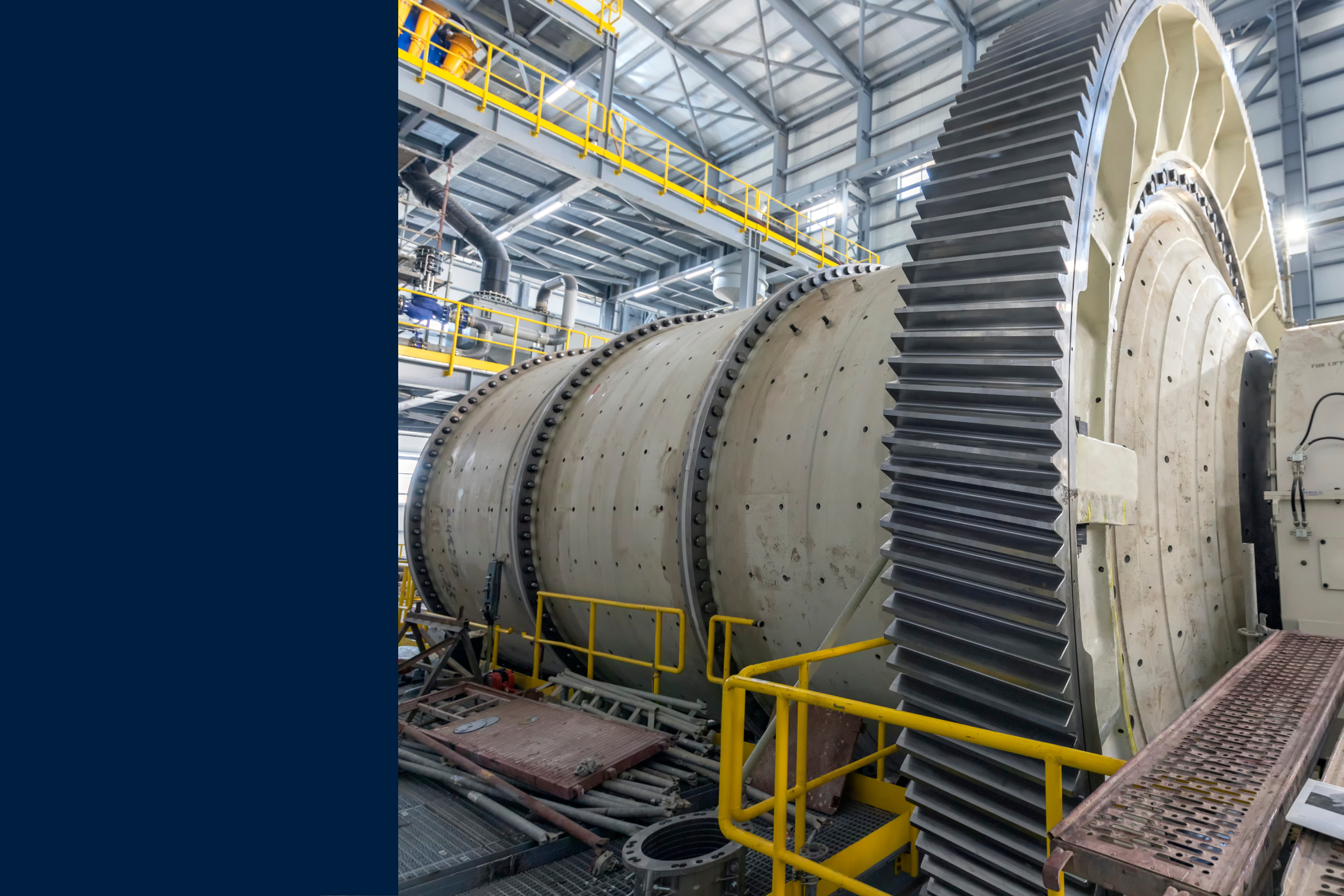
In The Execution Era of Predictive Maintenance: Outlook to 2030, Owens Corning’s Tessenderlo plant in Belgium shows the impact of continuous monitoring. Wireless sensors detected irregular vibration and a sharp temperature increase on a 40-year-old ball mill. An inspection uncovered a cracked shaft, damaged bearing shell, and lubrication failure. Because replacement components had to be custom-made and ordered months in advance, catching the issue early gave the team time to plan the repair and helped avoid more than $11 million in production losses, repair costs, and downtime.
Lesson 3: Start where failure has bigger consequences
Manufacturers don't need to monitor every asset to get value from predictive maintenance. Start with equipment where early warning would significantly change the outcome.
Porter recommends looking for several indicators to determine whether monitoring is worthwhile:
- Recurring unplanned downtime
- High levels of emergency or break-in work
- Known "bad actor" assets that cause most of your problems
- High maintenance and overtime costs
- Large stores of just-in-case spare parts
- Limited insight into root causes
Bowman adds an even simpler qualification: If a facility has rotating equipment, prioritizes overall equipment effectiveness (OEE), and needs to do more with limited labor, vibration monitoring likely has a role.
This technology matters more as experienced technicians retire; many plants still depend on people who can hear or feel when a machine is running abnormally. Monitoring doesn't replace that expertise, it preserves and extends it. As Bowman puts it: "Ultimately, what we want to do is have the person be able to turn the wrench to fix the thing, as opposed to trying to diagnose it or figure out what they need to fix next."
Start small with a handful of production-critical or repeat-offender assets, then expand based on risk and what you learn.
Lesson 4: Data quality determines everything that follows
Everything in predictive maintenance starts with data quality, and that begins at the sensor. PdM isn't one-size-fits-all: different assets, speeds, environments, and mounting constraints call for different sensing approaches.
Bowman recommends evaluating practical considerations such as:
- Whether the sensor can fit and remain securely mounted
- Whether it can support slow-speed or variable-speed assets
- How it performs in heat, moisture, dust, chemicals, or washdowns
- Whether battery life is measured in months or years
- Whether batteries can be replaced
- How much network and gateway infrastructure is required
"If the sensor can't collect data that's consistent and reliable over time, everything breaks down," Bowman says.
Manufacturers should also look for providers experienced in their specific industry, since sensor placement, sampling frequency, and alarm thresholds all need to reflect how the equipment actually runs.
Lesson 5: AI needs human expertise to become actionable
AI has dramatically improved the speed and scale of vibration analysis, reviewing huge quantities of data and flagging changes worth attention. But identifying an anomaly isn't the same as diagnosing a problem.
"AI is great at identifying anomalies, but without context, that anomaly detection creates a mountain of work for a facility that’s already overloaded," Bowman says. "The real value in predictive maintenance comes when insights actually drive reliable action."
An alert might indicate that vibration increased. A useful recommendation should help the team understand:
- What fault may be developing
- How confident the diagnosis is
- How quickly the condition is progressing
- What the technician should inspect
- What action should be taken
- Whether the machine can continue operating
Analysts bring knowledge of vibration patterns, equipment designs, operating conditions, and failure modes. Onsite technicians contribute what they can see, hear, feel, and verify at the asset.
The Execution Era of Predictive Maintenance describes one case where a reliability engineer spotted a subtle high-frequency pattern on a vertical turbine pump that matched no existing model, but experience linked it to a specific sleeve-bearing failure. Human judgment caught what the algorithm hadn't learned yet. This is just one example of how the most effective programs combine both technology and people.
Lesson 6: PdM succeeds or fails at the point of execution
Predictive maintenance doesn't end when a problem is detected. Many programs break down in the handoff to the maintenance team. An alert lands in an email or a separate dashboard, and someone has to interpret it, decide it matters, write a work request, and assign a technician before anything happens.
"Deep integrations with the CMMS tool that [teams are] leveraging is key to be able to get the data to the people at the time that they need it, to be able to schedule, do the work, and make sure the work is completed," Bowman says.
Waites is an AI-driven predictive maintenance provider that combines industrial vibration sensors with human analysts to catch equipment problems before they cause downtime. Waites integrates with MaintainX to allow anomalies to become analyst-verified work orders, complete with findings and recommended actions. Completed repairs then flow back to inform the analysts. The sensor shows what appears to be happening, and the completed work order shows what was actually found and fixed. Over time, that combined data improves future recommendations, standardizes procedures, and helps teams make better decisions.
Getting PdM right means connecting detection to decision-making
After 20 years of progress, vibration monitoring technology is smaller, faster, more durable, and more intelligent than ever, but the requirements for success are not purely technological.
The next era will bring more edge processing, more advanced AI, and easier ways for teams to query their maintenance data—though manufacturers do not need to wait for those developments to improve reliability today.
Start with assets where failure matters most, and collect dependable data. Turn anomalies into clear actions and planned work for your team. Then capture the result of their efforts so the next decision is better informed.
That’s the difference between monitoring equipment and building a predictive maintenance program that works.
Hear more from Waites and MaintainX on the full Wrench Factor episode, or read the complete findings in The Execution Era of Predictive Maintenance: Outlook to 2030.

Vicky is the Sr. Product Marketing Manager for partnerships and integrations at MaintainX. She has built a career at innovative software companies dedicated to driving digital transformation and operational excellence within the utilities, construction, and manufacturing industries.



.webp)
.webp)