
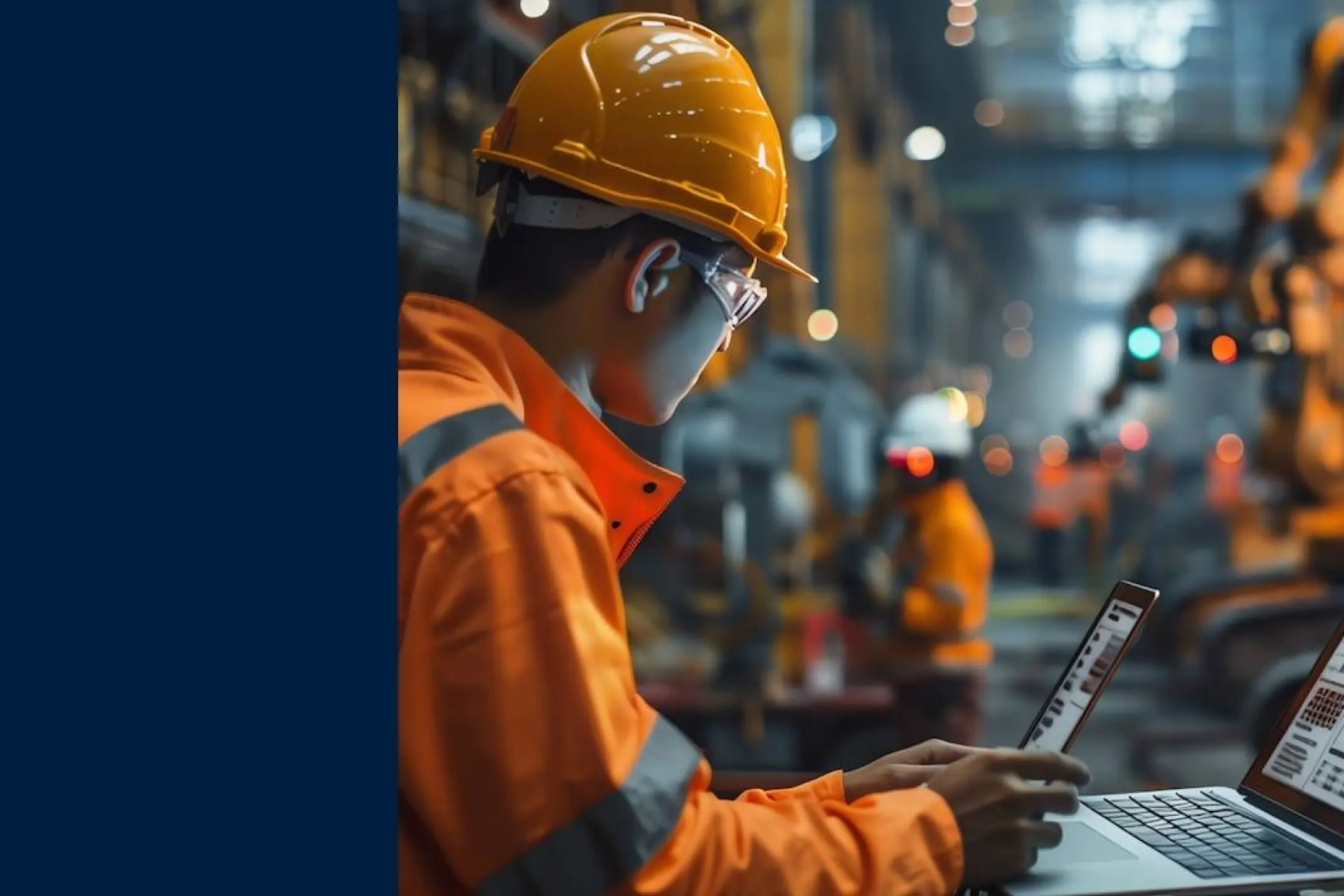
Most maintenance teams have heard the AI pitch, but not all have seen what it looks like when it supports work on the plant floor.
That visibility into real workflows is important. Maintenance leaders do not need another abstract promise about what AI might do someday. They need to know how it can impact tomorrow’s work and this month’s targets, like how it can reduce repair times, improve technician efficiency, and turn machine data into action.
This article bridges this gap between ambition and action by highlighting four maintenance teams that are already using AI in their everyday work. Their stories show what AI-powered maintenance can look like in practice and what teams can take from it as they apply AI to their maintenance operations.
Key takeaways
- AI works best when it has access to trusted asset data, manuals, work history, and machine signals.
- The clearest early wins come from reducing troubleshooting, documentation, and procedure creation time.
- Successful AI adoption requires clear use cases, phased rollout, technician feedback, and ongoing data cleanup.
Before and after AI: A snapshot
Autowash: Using AI to reduce MTTR across 26 locations
Autowash operates 26 car wash locations, supported by a central warehouse and service fleet. With so many facilities, a slow repair at one location can affect standardization, customer experience, and revenue across the company.
Autowash used to manage maintenance through a mix of spreadsheets, handwritten work orders, voicemails, forms, and Teams channels. That made it hard to prioritize work, track repair history, and share knowledge across locations. Repairs often depended on finding the right person who had solved a similar issue before.
They replaced this complex collection of tools with a CMMS that gave the team one place to manage work, track service tickets, document asset history, and make equipment knowledge easier to access. The platform’s AI capabilities allowed technicians to use manuals, guides, and asset-specific resources to get answers faster while staying in the workflow. All they had to do was ask the AI a question while troubleshooting a problem and the AI would surface the answer and steps to execute the fix while citing the exact page of the manual or work order.
After starting to use these AI tools, Autowash was able to reduce MTTR by 74%, saved more than $3M in downtime costs, and cut reactive work orders by 15%.
Hudsonville Ice Cream: Using machine data to predict asset failure
Hudsonville Ice Cream is a high-capacity food and beverage manufacturer. There’s very little room in the company’s schedule for unplanned equipment downtime.
The company already had advanced automation and access to real-time equipment data through Ignition. The problem was that machine data was not consistently reaching the maintenance workflow. Only a few people could monitor the system, and turning those signals into work still required manual effort.
The team decided to connect their CMMS to its OT systems to centralize machine data, work orders, communication, asset manuals, and alerts. Ignition signals now flow into the maintenance software, helping the team monitor equipment continuously and route issues into the workflows that technicians already use. This allows the team to use AI to flag anomalies in asset performance so they could automatically schedule maintenance on those machines. Hudsonville is using these tools to build the foundation for a full-scale predictive maintenance program.
The team also used AI to cut procedure and work order creation time by 90%, saving technicians at least two hours per week on work order processes alone.
Read the full Hudsonville Ice Cream story
Cintas: Rolling out AI across 900 technicians and 200 sites
Cintas needed AI to work across hundreds of sites and technicians to help find efficiency at scale. The company faced a big challenge at the very beginning of the project: the team had to make thousands of pieces of data usable for AI. Instead of trying to get perfect data in every area, they instead focused on a small set of high-impact data, including standardizing asset names, matching OEM manuals to the right equipment, cleaning up procedures, and improving work order history.
From there, Cintas took a phased rollout approach. The team started with pilot locations that were ready to test, gathered feedback, shared wins and challenges, and used those lessons to improve each next wave.
The result was an AI adoption model at enterprise scale: 900 technicians across 200 sites using AI to troubleshoot repairs, create maintenance SOPs, and identify patterns in reporting across sites.
What these teams have in common
Three lessons stand out across these AI success stories:
1. AI needs the right maintenance context to be useful
AI works better when it can draw from information the maintenance team already trusts, like asset records, equipment manuals, work order history, procedures, machine signals, and failure data.
That context matters because maintenance questions are rarely generic. A technician does not just need “how to fix a pump.” They need help with a specific pump, in a specific location, with a unique repair history and operating context.
The more connected and accurate the underlying data is, the more useful AI becomes in the daily workflow.
2. The biggest early wins come from reducing the work around the work
Some of the clearest wins maintenance teams get from AI come from removing the admin, search, and documentation time that slows teams down. That can mean finding repair information faster, generating a first draft of a procedure, creating a work order from machine data, or helping teams avoid starting from scratch every time a similar issue comes up.
Those improvements can sound small on their own, but across hundreds of shifts, they add significant capacity to the team to do more of the skilled work they do best.
3. Adoption has to be designed, not assumed
AI will not deliver value just because it is available. Teams need to understand when to use it, what information it draws from, and how it fits into the way maintenance work already happens.
That means starting with clear use cases, testing with teams who can give useful feedback, sharing examples of what works, and tracking whether people are actually using the tool. It also means improving the data behind the AI over time, because trust depends on the quality of the answers.
What AI-powered maintenance looks like in practice
AI in maintenance is about helping teams act faster with better information. These stories show that the strongest results come when AI is tied to real workflows: troubleshooting repairs, creating procedures, monitoring equipment, and standardizing work across sites. For maintenance leaders, the next step is not to “adopt AI” broadly. It is to find the highest-friction work your team already does, connect the right data, and use AI to make that work easier, faster, and more consistent.

Marc Cousineau is the Senior Content Marketing Manager at MaintainX. Marc has over a decade of experience telling stories for technology brands, including more than five years writing about the maintenance and asset management industry.

.webp)