
Root Cause Analysis Software
RCA software that helps you improve asset availability and uptime
Get the structured tracking your team needs to understand why failures happen and prevent them from happening again.


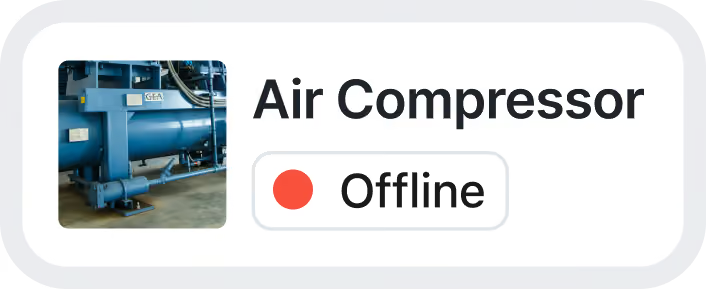
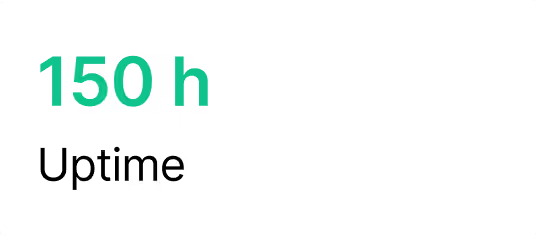
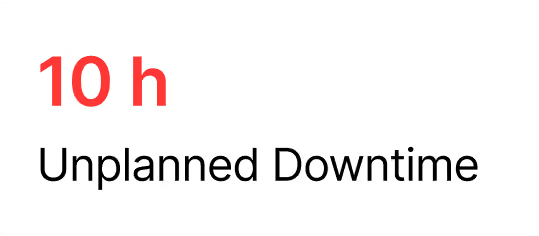
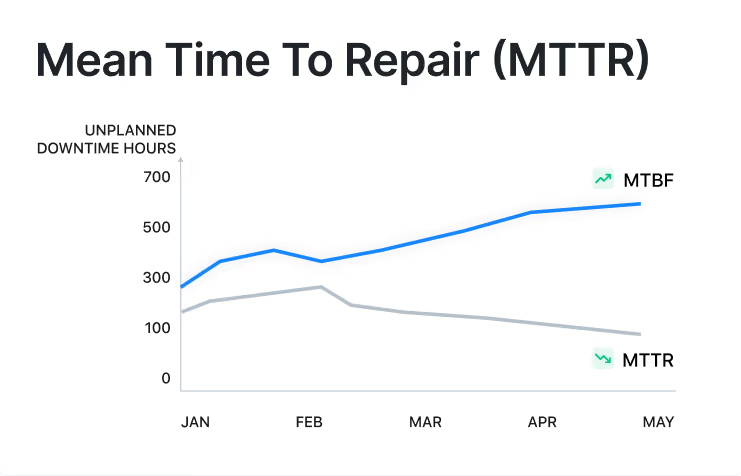










Our clients using MaintainX report
Turn every failure into a root cause report
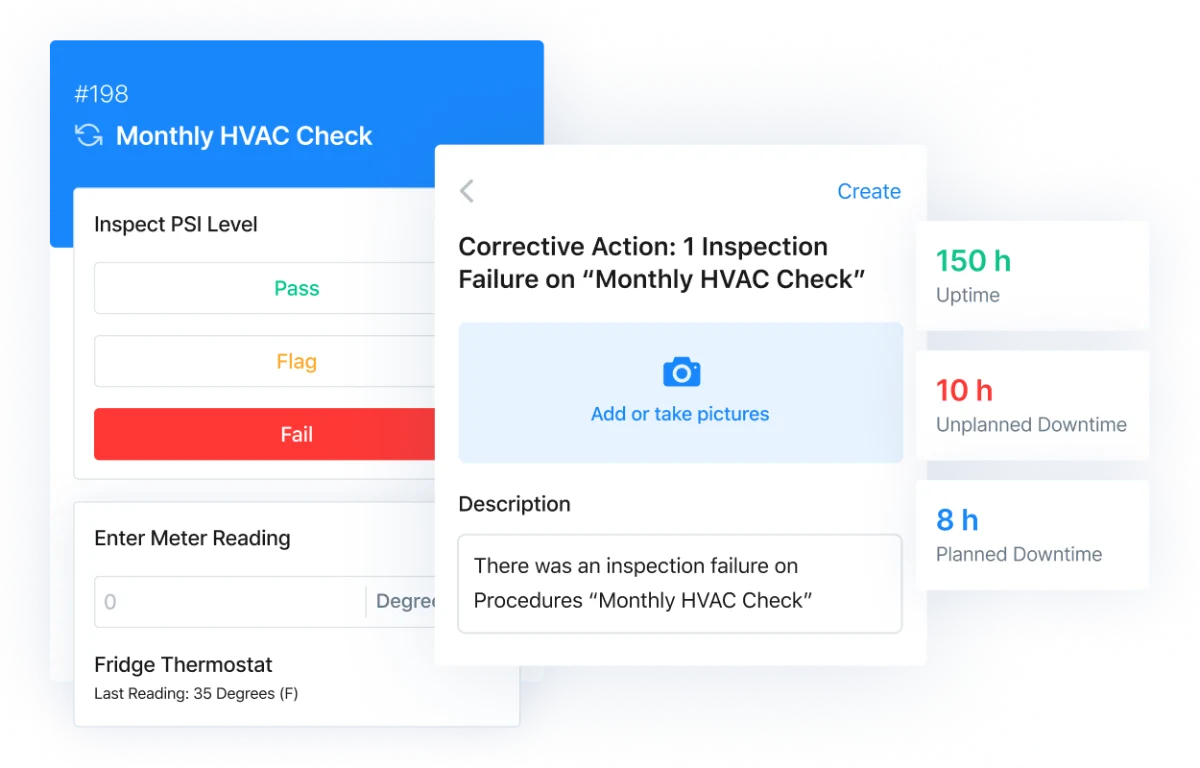
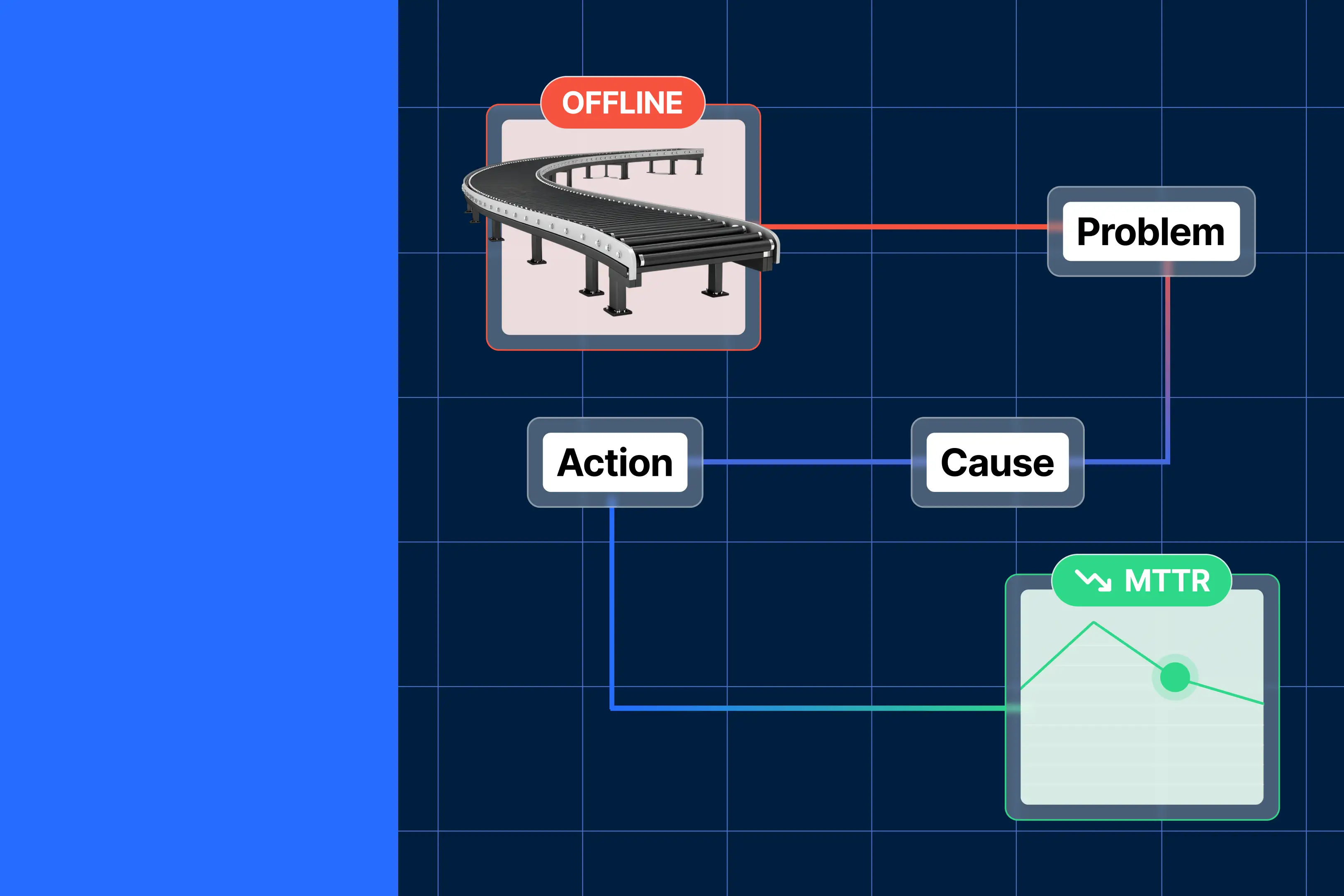
Use predefined categories to log a consistent problem, cause, and corrective action for every failure. That way, teams start the next investigation with useful details instead of a blank notes field.
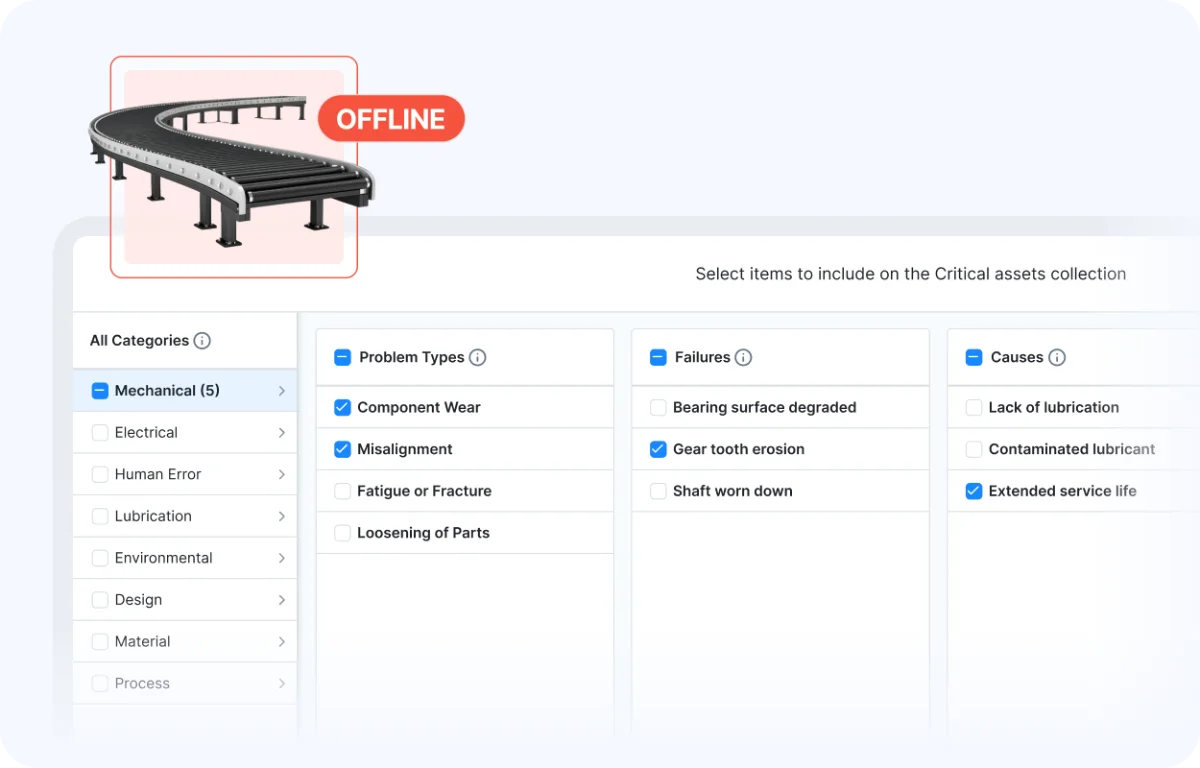
Keep reporting consistent
Set up root cause categories by asset type or criticality. This helps technicians see the right options every time and keeps your data clean.
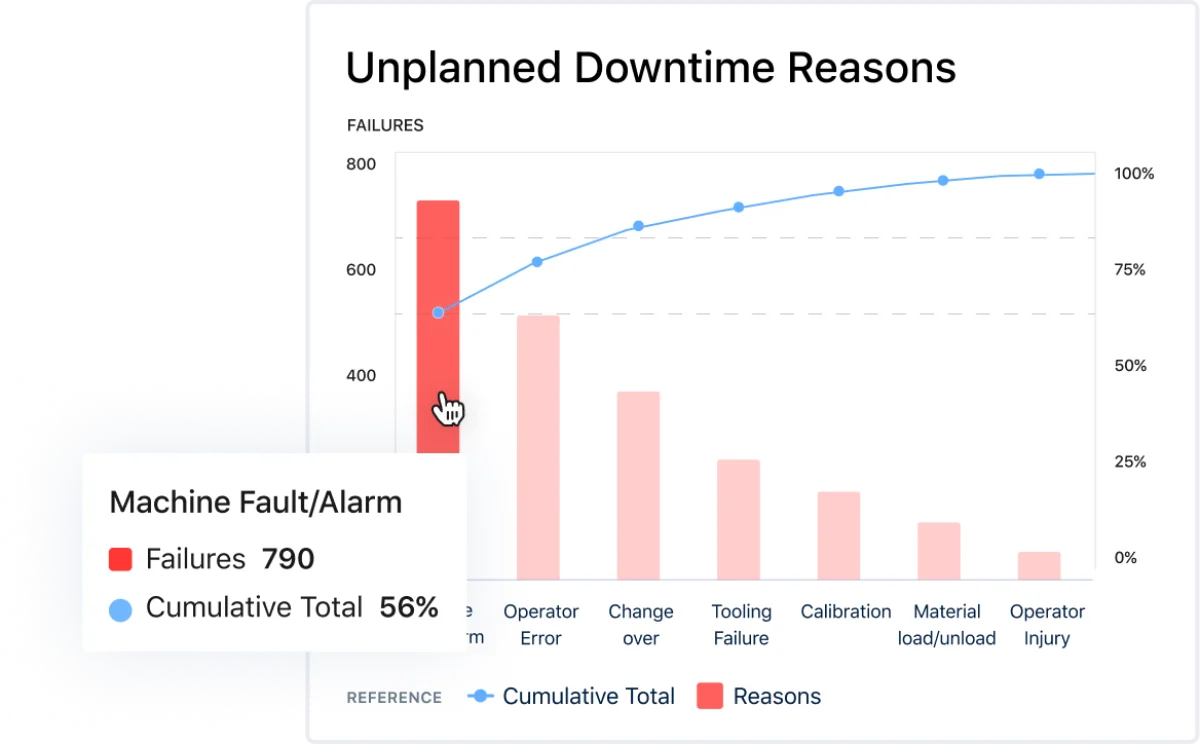
See which root causes are driving the most downtime
Spot patterns across all your assets, like the same failure code repeating on multiple machines, so you can make a fix before it becomes a bigger reliability or safety risk.
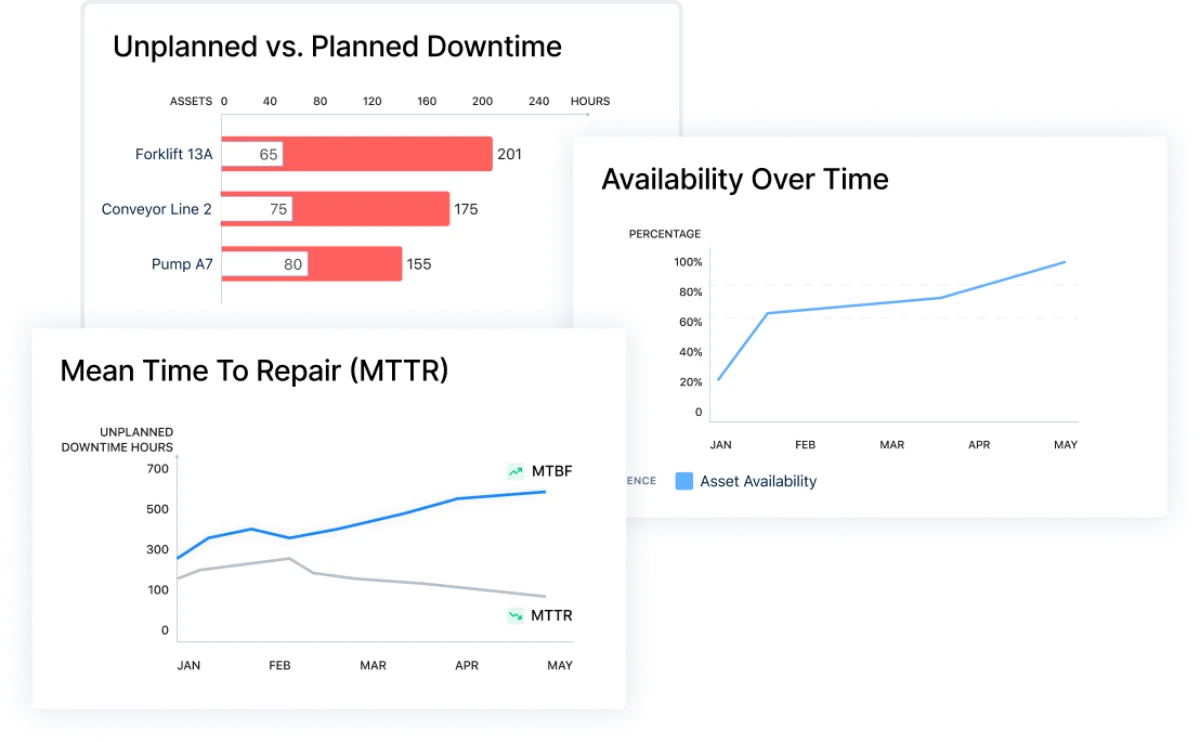
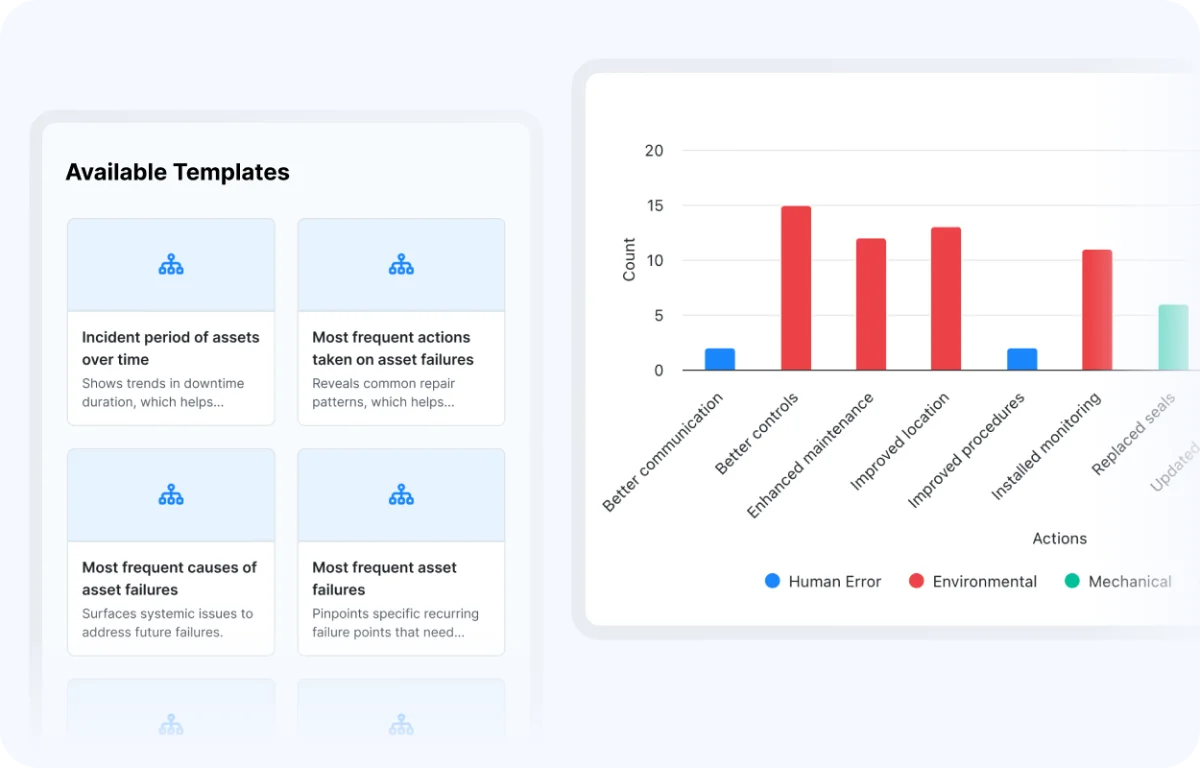
Turn root cause data into action on the plant floor
Pre-built and custom reports make it easy to compare asset failures, schedule maintenance, and make repair-vs-replace decisions using evidence instead of anecdotes.
Get an AI assistant trained on your equipment
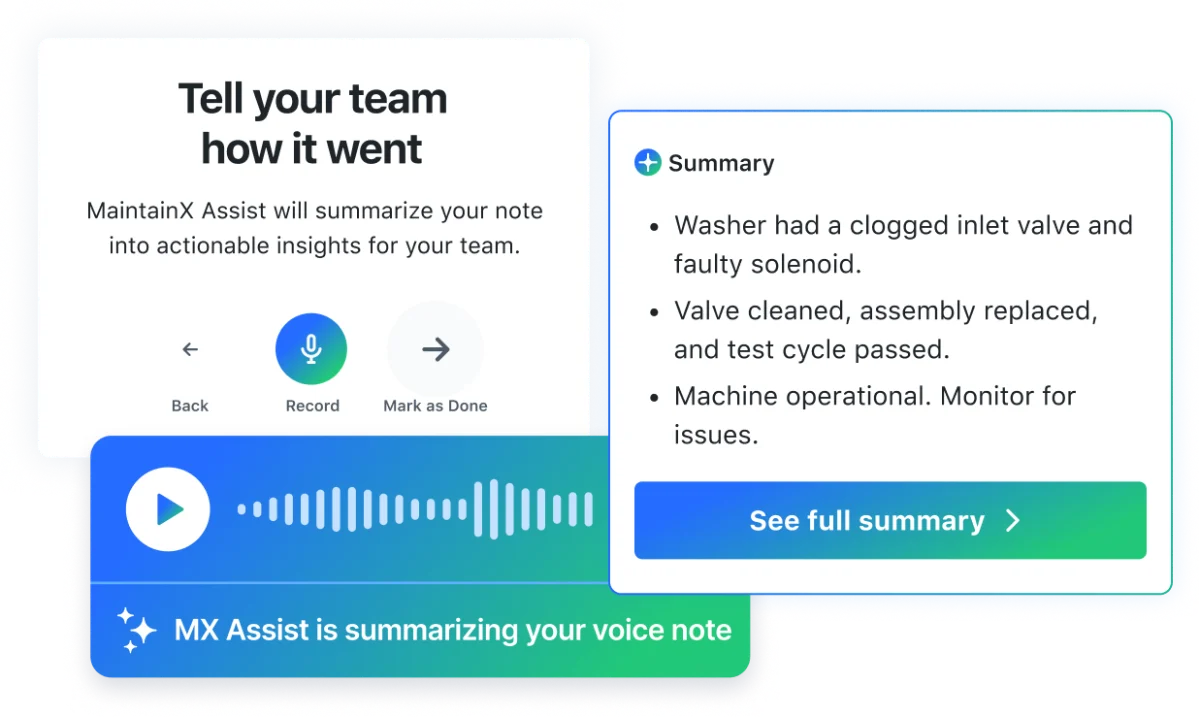
Turn your troubleshooting questions into immediate answers. MaintainX Assist pulls recommendations straight from manuals, technician notes, and work order history.
Make sure fixes prevent repeat failures
Trigger corrective work orders automatically, assign follow-up tasks, and track if fixing the underlying cause made an impact so the same failure doesn't show up again.






Award-winning software you can trust







See what customers have to say
We use MaintainX to manage and maintain more than 50 critical assets, achieving significant improvements in machine uptime.

MaintainX allowed us to follow the trends and develop a maintenance plan to drastically reduce downtime.
MaintainX has brought data to the table for the first time. We can actually evaluate the quality of our work and if we are fixing things right the first time.
Frequently asked questions
Got a question? We’ve got answers. Need troubleshooting help? Check out our Support Center.
What is root cause analysis software?
Root cause analysis software helps teams investigate why a failure happened instead of just fixing the symptom. RCA tools help structure the investigation into equipment breakdowns, stores evidence like photos and data points, and tracks corrective actions so the same problem doesn't keep coming back.
What's the difference between root cause analysis and regular troubleshooting?
Troubleshooting gets equipment running again. Root cause analysis goes further by determining root causes behind the failure, not just the immediate trigger, so you can implement solutions that prevent recurring issues instead of repeating the same repair.
What is the 5 Whys method?
The 5 Whys method is a simple RCA technique that involves asking "why" five times, starting with the failure and working backward until you reach the actual root cause instead of stopping at a surface-level symptom.
What is a Fishbone diagram used for in root cause analysis (RCA)?
A Fishbone diagram (also called a fish skeleton diagram) categorizes potential causes of a problem, like equipment, people, methods, and materials, into a single visual analysis tool, making it easier to spot underlying causes across a complex investigation.
What is FMEA and how does it relate to root cause analysis?
A failure mode and effects analysis (FMEA) identifies potential failure modes before they happen and assesses their consequences. It's often used alongside root cause analysis to prioritize which failure modes deserve attention first.
What is a Pareto chart in root cause analysis?
A Pareto chart ranks root causes by frequency and impact, helping teams focus corrective actions on the failures causing the most downtime or cost rather than spreading effort evenly across every issue.
What is causal factor tree analysis?
Causal factor tree analysis (or a fault tree analysis) is an RCA process that visually maps the chain of decisions and events that led to a problem, making it easier to see how multiple root causes contributed to a single failure.
What's the ROI of using RCA software?
Organizations that run structured root cause analysis typically see 10–20x ROI, largely from eliminating recurring issues, reducing unplanned downtime, improving quality control, and recovering engineering and technician time that would otherwise go toward the same repeat repair.
What are the most common mistakes teams make during root cause analysis?
The most common that maintenance teams get wrong during a root cause analysis include failing to define the problem clearly, skipping data collection and data analysis, letting preconceived notions bias the investigation, stopping the questioning process too early, and leaving out the team members who actually know the equipment.
What should I look for in root cause analysis tools?
Look for a structured investigation workflow, a visual cause-and-effect diagram, collaboration features for multi-user evidence collection, workflow management for task assignment and approvals, and analytics that flag repeat failure patterns over time. Having these capabilities in root cause analysis software not only help in identifying root causes, but will also allow you to action your findings so you can focus on implementing corrective and preventive action, pursuing continuous improvement, bolstering your team's knowledge sharing, and building out a system for anomaly detection.