
Lone Star Dairy Cut Preventive Maintenance Costs in Half by Connecting MaintainX to Ignition
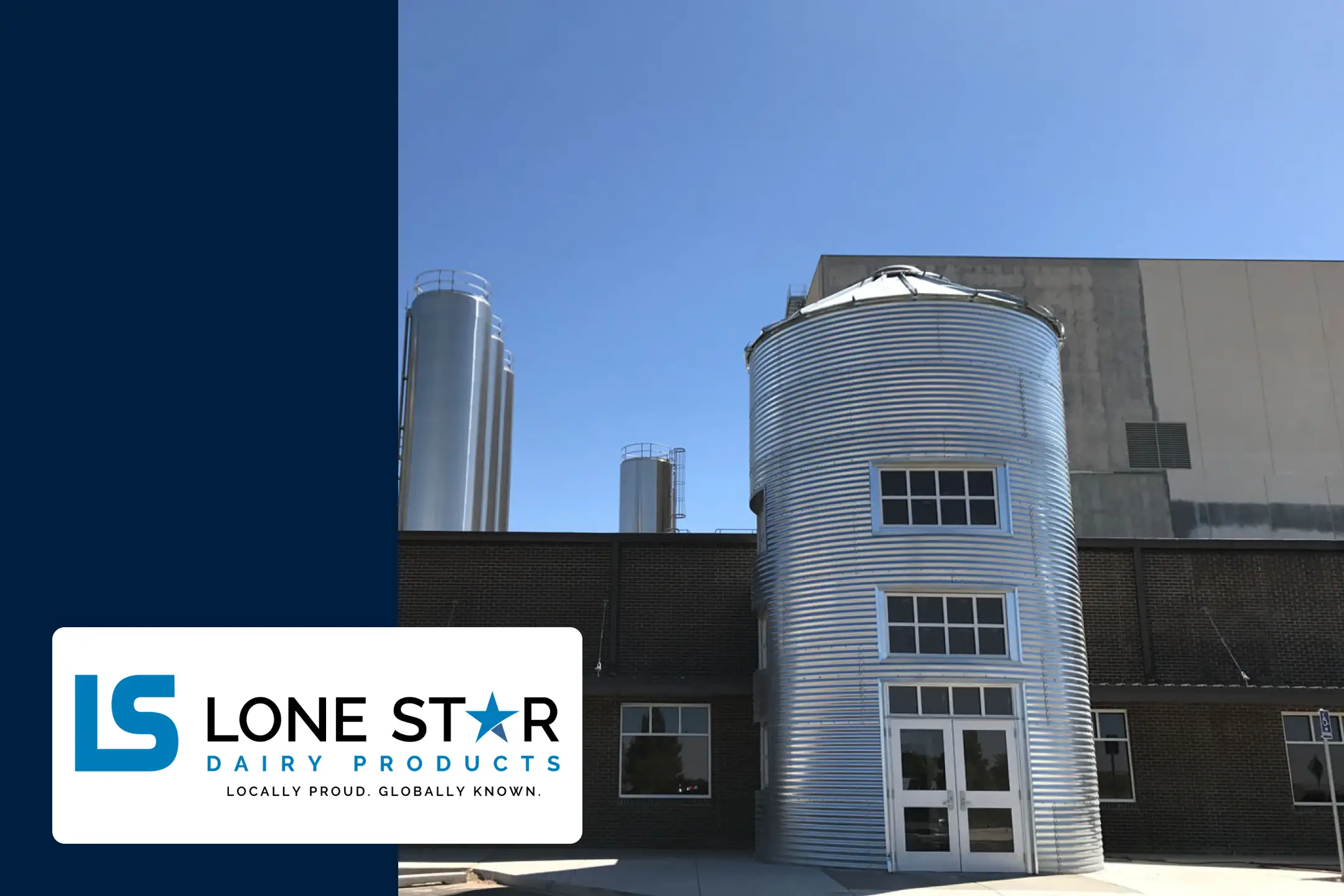
Lone Star Dairy Products makes customizable dairy ingredients in a facility built to maintain the highest quality standards. This takes a wide range of equipment to pull off, including separators, evaporators, sub-evaporators, and temperature sensors throughout a fully enclosed process.
When equipment goes down, there's often not a second machine waiting to pick up the slack. “Most of our machinery is critical because we don't have a lot of redundancy,” says Carlos Bernal Urbina, the plant controls engineer at Lone Star’s facility in Canyon, Texas.
Under the team’s previous maintenance system, preventive maintenance (PM) tasks ran on the calendar regardless of equipment conditions, which meant the team was over-servicing some machines and under-serving others. This led to unnecessary downtime and even unexpected failures, a major disadvantage in a facility where at full throughput, an hour of downtime could cost up to $30,000.
While Lone Star had the equipment data it needed to move away from fixed PM calendars, the information lived where no one could act on it. This led the team to seek out a platform that could pull data in and put maintenance on a more precise schedule.
Challenges before MaintainX
Inefficient, calendar-based maintenance
Lone Star’s old maintenance system subjected machines to PMs whether or not they were running during that period.
The PM schedules for separators, for example, called for a quarterly oil change. During slow periods, the team was pulling equipment down and changing oil on machines that didn’t need it. But during heavy production runs, maintenance didn't come around often enough to keep up with actual wear.
Failures without warning
Temperature sensors are among Lone Star’s most critical instruments. When one malfunctions, it can impact production without warning. Sensor repairs could take a few minutes if caught early, or a full day or more if a line clogged.
Data that indicated when something was off was available, but difficult for the team to monitor consistently.
“If our temperature sensors failed, we didn’t know until it affected production because nobody's just staring at the screen all day looking to see what's wrong,” Carlos says.
No CMMS access where the work happened
Mobile access wasn’t part of Lone Star's previous system, which put the entire maintenance crew in line for a shared computer. “The mechanics could only use it from the computer, and they didn’t have their own computers,” Carlos says. “Each of them would have to wait their turn.”
This system cut technicians off from information they needed in the field, like parts and work history. Inventory searches went through a parts attendant, while work order searches were confusing enough that many technicians never got comfortable with them.
The impact of this lack of visibility included costs like expedited parts orders when something turned out to be missing, and duplicate orders for parts already sitting in the storeroom.
Why MaintainX
Ignition integration
Lone Star started evaluating new CMMS platforms around the same time they adopted Ignition, as their previous system had no path to use the information Ignition delivered. “There was no way to bring in data,” Carlos says.
Adding the MaintainX connector to a system they were already standing up “was kind of a no-brainer,” Carlos says.
Quick migration
The team was evaluating new systems casually until they realized their previous CMMS’s license was 20 days from renewal. Another vendor quoted a six-month timeline, but MaintainX got Lone Star fully migrated inside the 20-day window.
Powerful features in the field
MaintainX’s feature set also eclipsed other vendors. This included its mobile-first design, which encouraged technician adoption.
“None of the other systems we saw had the same feature set we got from MaintainX,” Carlos says.
Results
Cutting downtime and PM costs
MaintainX now triggers oil changes for separators based on runtime from Ignition (1,500 hours of operation, matching manufacturer spec) instead of a fixed date. As a result, PM costs for separators have been cut in half.
Lone Star estimates that the eliminated PMs, combined with the unplanned downtime the triggers help the team avoid, potentially save the company $50,000 to $60,000 per year on separators alone.
Catching issues before they reach production
With Ignition data flowing in, MaintainX helps the team prevent failures by automatically generating condition-based work orders.
“Our temperature sensors automatically go to 300 if there's a short or an open circuit on them, so it was very easy to set MaintainX up to send out a work order to check the machine if it reaches that temperature,” Carlos says. “With automatic work orders, we can get on it right away rather than waiting for it to actually become an issue.”
Reporting problems from anywhere
In Lone Star’s previous system, submitting a work request required an expensive license, so requests funneled through a handful of designated people in each department. With MaintainX, anyone on the team can open one.
MaintainX also improved the team’s ability to quickly add details to a ticket. Before, if a request needed a picture, the requester had to upload the photo to a computer before they could attach it to a work order. Now, team members can snap a photo at a machine and attach it to a request on the spot.
Saving time for the crew
Mobile access turned the plant's biggest time sinks, like finding parts, into simple searches.
Before, it was simpler for operators and technicians to call the parts attendant in the warehouse than to look them up in the cumbersome, desktop-based system. “Now we can just pull out our phones and look it up really quick,” Carlos says.
Visibility into parts and work history also helps teams troubleshoot more efficiently. “We couldn't even look up work history before," Carlos says. “It's nice being able to see what parts have been used on a machine and the history of when parts have been taken out. We can see if we've thrown the same part at this machine two times this week already, which helps narrow down the issue."
He estimates MaintainX has saved each technician at least an hour per shift, which works out to roughly four hours a day.
Capturing team expertise
Several maintenance team members recently left the company, but MaintainX has kept their knowledge from walking out the door with them.
When the team started planning this year's sub-evaporator teardown, Carlos feared they’d have to reconstruct the process from memory and personal notes. But a maintenance supervisor who’d left had built a procedure in MaintainX for it, covering every valve, sensor, and check the job requires. “I pulled it up, sent it over to the team, and now we're ready to finish our inspection.”
The platform appeals to new talent, too. When interviewing candidates for an assistant maintenance manager role, Carlos asked each one about their CMMS experience. "Almost every single one of them was like, 'You're on MaintainX? You guys are lucky.’”
Looking ahead
Evaporators and sub-evaporators are the next assets Lone Star has lined up to move off the calendar. They’re on six-month PMs today, and the team is evaluating what usage-based triggers should look like.
The team is also building variable frequency drive (VFD) fault workflows, which will give them even more insight into emerging equipment problems.
“If there's a fault that says this motor was overloaded at some point, that usually tells us either the pump is clogged and is going to fail, or the motor is failing,” Carlos says. “But often operators will just acknowledge an alarm, reset it, and get the machine back working, and we never even know the fault happened.”
Once the workflows are in place, VFD fault codes captured in Ignition will be sent to MaintainX. Based on the code, MaintainX will automatically trigger a work order so the maintenance team can investigate the underlying issue.
“I think the VFD workflows are going to help us a lot,” he says. “I think that’s going to be where we save the most money.”


.webp)