
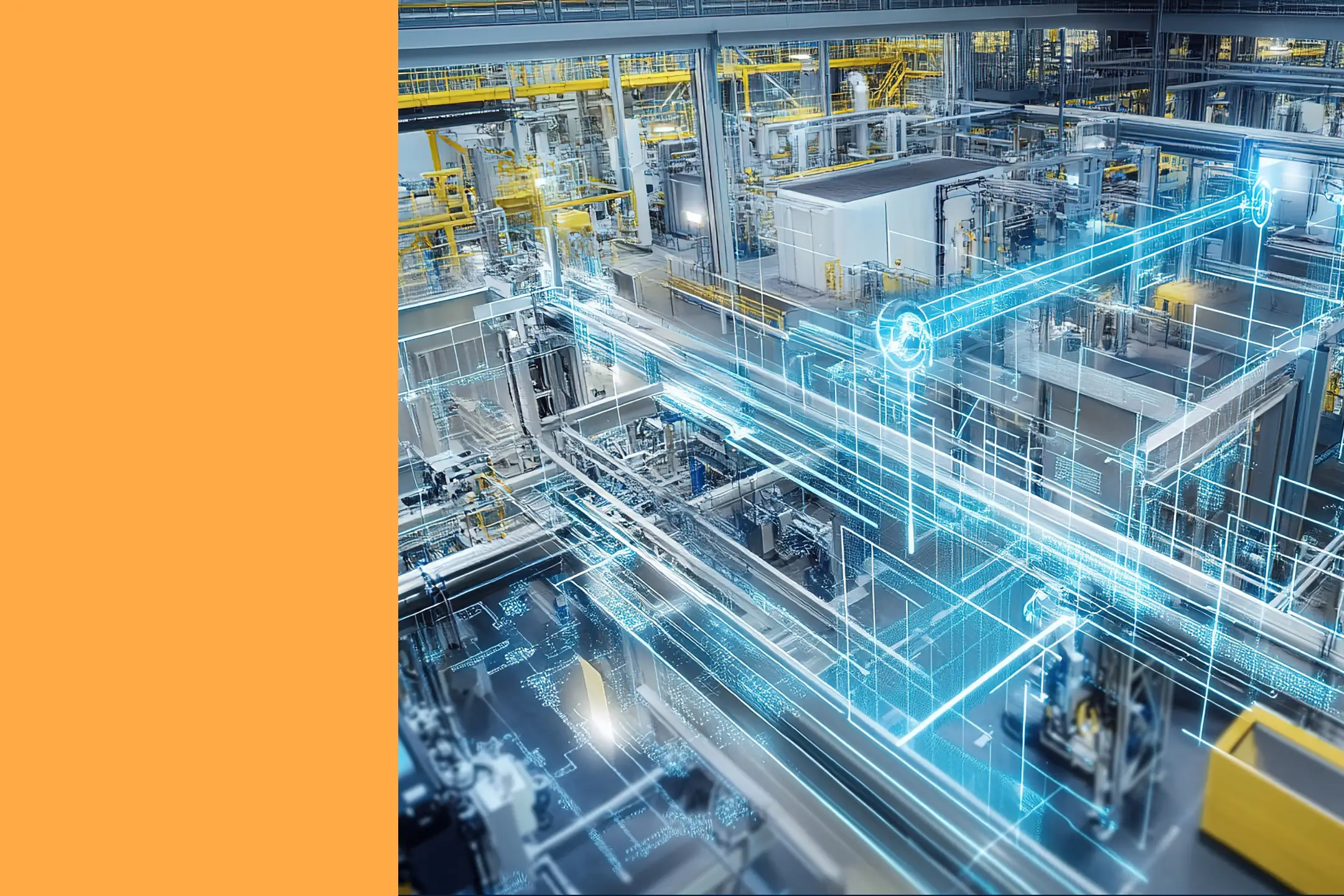
The AI train is already at the station.
Right now, the doors are open. Tickets are cheap. There’s plenty of time to get on, find a good seat, and settle in. But the longer you wait, the harder it becomes to catch the train.
And soon, instead of stepping onboard, you’ll be sprinting to the next stop trying to catch up to competitors who are already comfortably seated and miles ahead.
If you’re hesitating on AI due to cost concerns, you’re not alone. According to MaintainX’s State of Industrial Maintenance report, budget constraints and implementation costs topped the list of barriers to AI adoption.
The good news is you don’t need a “smart factory” budget to get started, because the teams seeing real wins aren’t rolling out AI everywhere. They’re starting small and letting quick wins fund the next steps.
I talked to Nick Haase about what effective AI actually looks like on the factory floor today. Watch our conversation below, then read on to learn more about the shifts you need to make to start seeing real results from AI tools.
AI needs the right fuel to learn
When people ask me to explain AI, I tell them it’s like the technician who’s been on your floor for 40 years. It’s the person who can just hear a machine running and tell you if a bearing is about to fail.
The difference is that instead of learning from a career’s worth of experience, AI learns from:
- Work orders and failure codes
- PM histories and parts usage
- OEM manuals and SOPs
- Technician notes and photos
The catch is that if your factory still runs on sticky notes, whiteboards, and one-word work order descriptions, that “40-year technician” is flying blind.
Before AI can help, you have to build the habit of capturing what’s already happening on the floor in a system that can learn from it.
CMMS is an underrated launchpad for AI
With data capture in mind, one of the most overlooked starting points for AI is the tool you might already have: your computerized maintenance management system (CMMS).
A modern CMMS is where your asset histories, work orders, parts, and procedures live. When you layer AI on top, that turns into:
- Instant answers from manuals and history: “What’s the torque spec on this motor?” “What usually causes this alarm?” An AI assistant can search manuals and past work orders and surface the steps in plain language.
- Better procedures, faster: Technicians can turn their notes or voice memos into standardized procedures and work orders. No more reinventing the wheel every time a job comes up.
- Higher-quality work orders: AI suggestions can help teams fill in missing steps, parts, or safety checks as they create or close work orders (without more typing).


AI is your competitive edge (not your competition)
The fear that “AI will take our jobs” comes up on a lot of plant tours I do.
But what I’ve learned is that the manufacturers using advanced technologies are taking business from those that don’t.
I saw this up close at a machine shop here in Michigan. They were at risk of losing millions of dollars in business to overseas competitors. Instead of cutting staff, they invested in automation. Robots handled repetitive machine tending to keep equipment running an extra six hours a night.
In the end, because of this automation initiative, the shop kept the work, grew the business, and ultimately hired more people.
That’s the pattern I see: shops that adopt AI and automation are protecting jobs by protecting revenue.
AI doesn’t have to be everything
One big mistake I see on plant floors is teams thinking AI has to touch everything to be worth doing.
They picture a multi-year project involving new platforms, new integrations, new training. No wonder these projects stall out.
Today, the most successful manufacturers are treating AI like a series of experiments, (e.g., Add a low-cost sensor to a critical asset. Stream that data into your CMMS. Then use AI to surface patterns you couldn’t see before, like which shift is driving most of your downtime or which failure mode keeps coming back.)
You don’t need an IIoT re-architecture to do that. You just need one workflow, one machine, one line, or one pain point to prove that AI can save your team time or prevent a few hours of unplanned downtime.
Small steps will get you on the train.
Where to start: Small wins that build momentum
To the point above, the most successful AI projects don’t start with robots on every line. Below are practical steps manufacturers are taking to see real wins with AI.
1. Get your maintenance data out of the shadows
If you want to “do AI,” step one is: stop losing information on paper. Start using a CMMS to digitize the basics:
- Standardize your asset list: One record per line, machine, or major subsystem.
- Clean up work orders and failure codes: Make it easy to see what failed, why, and how you fixed it.
- Capture parts usage and time spent: So you can see what work is actually costing you.
Teams that make this shift see meaningful drops in unplanned downtime and better PM completion because they finally have data they can trust.
2. Make downtime visible in real time
Once your basic work and asset data is in a CMMS, you can layer in simple AI and automation. Some good first areas to look at include:
Downtime visibility:
- Connect a low-cost sensor or meter to a critical asset.
- Feed that signal into your CMMS so you can see runtime vs. downtime by shift and asset.
- Use AI-generated summaries to highlight patterns (“this line goes down 3 times more on night shift,” “changeovers are your biggest downtime driver”).
Scrap and OEE tracking
- Digitize what’s on your whiteboards: pieces produced, scrap, and changeovers.
- Have your system flag out-of-range scrap events or a sudden OEE dip, and automatically create a work order to investigate.
- Over time, AI can surface “top 5 causes of scrap this month” without you living in spreadsheets.
3. Turn tribal knowledge into digital procedures
One of the biggest risks manufacturers face right now is experience walking out the door.
AI can help capture and share that knowledge before it’s gone. Here’s how to get started:
- Have your best technicians talk through or take pictures of the steps for their most tedious recurring jobs.
- Use AI to turn those notes and photos into standardized procedures and work orders that live in your CMMS.
- Put those procedures in the hands of newer techs so they can execute right the first time, with checklists, photos, and safety steps.
4. Make technicians’ lives easier
If AI tools add complexity or extra work for your technicians, they won’t get used. It really doesn’t matter how impressive the demo was.
The teams seeing the best results:
- Focus on mobile-first tools so technicians don’t have to run back to a desktop to update information.
- Use AI to reduce admin, not add it (auto-time tracking, voice-to-text notes, auto-filled forms are examples of admin-reducing tools).
When AI removes hassles like digging through manuals, adopting it becomes common sense.
Define what success looks like before you start
A lot of AI projects go sideways when teams set big, vague goals for AI (and digital transformation in general). Don’t just say you’re going to “improve reliability.”
Instead, set small, precise targets tied to business value and maintenance reality:
- 5% fewer hours of unplanned downtime on one line
- 10% reduction in repeat failures on a single asset family
- 10% more PMs completed on time on your pilot line
- 15 minutes faster average troubleshooting time on an asset
Start with one or two AI use cases, then prove the value there.
Catch the train before it leaves the station
Manufacturing teams need to stop seeing AI as the future, because it’s the present.
The State of Industrial Maintenance report shows that intelligent maintenance tools are quickly becoming the norm, with roughly 65% of industrial maintenance teams expecting to use AI in some part of their program in 2026.
You don’t need perfect data or a five-year roadmap to get started. You just need to pick one line, asset, or workflow and ask: “How could AI make this easier for my team next month?”
Start where your data lives. And start now.

Jake Hall, known as the Manufacturing Millennial, is an advocate for manufacturing, automation, and skilled trades helping to revolutionize the way people and companies present through social media. He ignites conversations about the latest in manufacturing and automation to excite the current and future workforce about our industry.



.webp)