
Manufacturing facilities and industrial operations face increasing pressure to maximize equipment uptime while controlling maintenance costs. Meanwhile, many teams are still using reactive maintenance approaches that leave them scrambling to address failures after they occur, which can lead to costly production disruptions.
“Smart maintenance” flips the script. Instead of fixing equipment after it breaks, these intelligent maintenance strategies use data to catch problems early, preventing equipment failures before they have a costly impact on operations.
Here, we’ve outlined the core technologies and implementation strategies for “smart maintenance.” We'll explore how condition-based monitoring integrates with preventive maintenance programs and show how a modern computerized maintenance management system (CMMS) is the foundation for successful smart maintenance initiatives.
Key takeaways
- Smart maintenance uses data from Internet of Things (IOT) sensors and artificial intelligence to predict equipment failures before they happen.
- Implementing a smart maintenance strategy requires key technologies, including a modern CMMS, sensors for condition monitoring, and a platform for data analytics.
- The primary benefits for your facility include reduced unplanned downtime, lower maintenance costs, and better production output.
- A CMMS like MaintainX is central to a successful smart maintenance strategy, as it automates work orders, manages asset data, and provides the analytics your team needs to make data-driven decisions.


What is smart maintenance management?
Smart maintenance is a data-driven approach that uses IoT sensors, artificial intelligence, and predictive analytics to monitor equipment health in real time and prevent failures before they occur. Unlike traditional maintenance with fixed schedules, intelligent maintenance strategies help maintenance teams make informed decisions based on actual asset condition data.
Smart maintenance relates to “smart manufacturing,” which is a cornerstone of Industry 4.0. Smart manufacturing involves using the Internet of Things to create intelligent factories that carry out advanced manufacturing processes. “Smart,” in this case, refers to using data collected by IoT sensors to organize the manufacturing process.
Technologies that enable smart maintenance
To build a smart maintenance program, your team needs the right set of tools to collect, analyze, and act on equipment data. These technologies work together to give you visibility into asset health and automate your maintenance workflows.
Computerized maintenance management system
A modern computerized maintenance management system (CMMS) is the foundation of your smart maintenance strategy. It acts as the central hub where the system manages all maintenance data.
A modern CMMS can schedule work orders when sensor alerts trigger them, track asset history, manage spare parts inventory, and generate reports on key performance indicators.
Internet of things sensors
IoT sensors are small devices you attach to your equipment to monitor its condition in real time. They collect data that allows your team to detect signs of wear or potential failure.
Common types include:
- Vibration sensors: Detect unusual vibrations in motors, pumps, and bearings that indicate misalignment or wear.
- Thermal sensors: Monitor equipment temperature to identify overheating issues in electrical panels or mechanical systems.
- Ultrasonic sensors: Identify high-frequency sound waves that signal gas leaks or early-stage bearing failures.
Data analytics and artificial intelligence
IoT sensors can feed the data they collect into an analytics platform, which uses artificial intelligence (AI) to identify patterns and trends. This platform analyzes the data to predict when an asset is likely to fail. When the system detects an anomaly, it can automatically trigger a work order in your CMMS, alerting technicians to the issue before it causes downtime.
Mobile devices
Mobile devices like smartphones and tablets are essential for empowering your technicians on the front lines. With a mobile-first CMMS, technicians can receive work orders, access asset history, view digital procedures, and log their work directly from the plant floor. This improves data accuracy and ensures your maintenance team acts on insights quickly.
Why should you try smart maintenance?
Let's examine the key benefits of this approach.
Lowers maintenance costs
Like all preventive maintenance, a smart predictive maintenance approach lowers your maintenance costs. Fixing smaller problems before they develop into larger ones is typically less expensive.
Replacing parts before they break saves you the stress of replacing an entire machine when the damage escalates. Also, because you're addressing problems beforehand, you can apply more thorough, longer-lasting solutions than you would in an emergency situation.
Smart predictive maintenance also saves money by reducing waste. Instead of using maintenance resources on all your assets simultaneously, predictive maintenance ensures your team’s schedule doesn’t include unnecessary actions. You'll narrow maintenance tasks down to the most impactful.
Increases accuracy of maintenance efforts
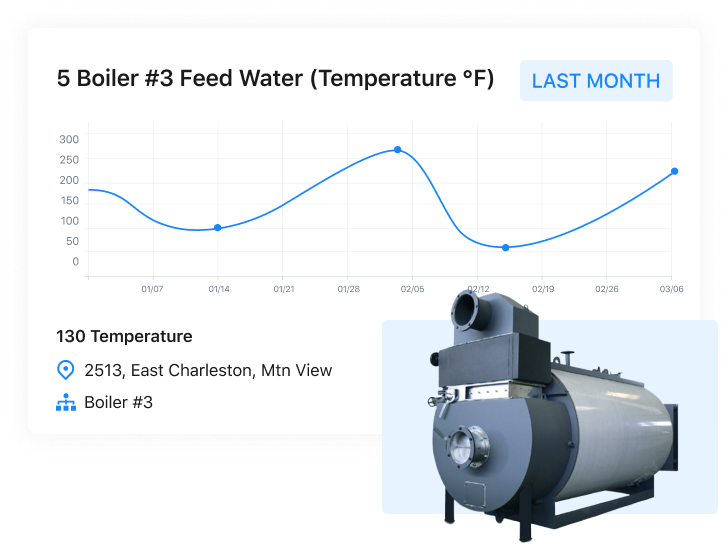
Real-time sensor data tells you exactly what's breaking and when, so you fix the right things at the right time. When a sensor notifies you about changes in the physical properties of certain assets, you have a more precise sense of what is going wrong and how to address it. You're not wasting time on equipment that's running fine. Instead, you're targeting the stuff that actually needs attention.
Increases production output
Smart preventive maintenance ensures that you lose fewer productive hours to unplanned downtime. Even in the case of a predicted failure, you plan your downtime and your crew focuses on the work that matters most.
Compare that to waiting for equipment to die, then scrambling to diagnose and fix it. When you predict failures, your machines stay running and your team stays productive.
Improves key performance indicators
Predictive maintenance improves key performance indicators (KPIs) related to equipment reliability and availability. Some of these KPIs include asset performance metrics like:
- Mean time between failures (MTBF): This refers to the amount of time equipment is operating between breakdowns.
- Mean time to repair (MTTR): Mean time to repair measures the average amount of time it takes your maintenance team to repair a broken asset.
- Overall equipment effectiveness (OEE): Overall equipment effectiveness measures how effectively equipment is being used, taking into consideration equipment performance efficiency, availability, and product quality.
How smart maintenance works
With a typical preventive maintenance plan, maintenance tasks are completed routinely. The idea is to address minor problems before they lead to equipment failure.
While a preventive maintenance program is optimal, it isn't always easy to execute. Teams want to prevent breakdowns and reduce unplanned downtime, but when resources are scarce, they may not be able to spare the time or funds to do weekly inspections on pieces of equipment that are working fine.
Smart maintenance aims to restrict equipment maintenance activities to only the most important by predicting when machines actually need attention.
Instead of a simple, time-based maintenance schedule, maintenance teams use predictive analytics to forecast when assets will likely fail, and then perform maintenance work just before.
Smart maintenance in action
Smart maintenance means paying close attention to the physical conditions of assets: how they work and any changes in their performance. Smart sensors are an effective way to accomplish this type of condition-based monitoring.
How condition monitoring systems work
Technicians can equip assets with monitoring equipment to collect performance data. Examples of this equipment include vibration analysis equipment, ultrasonic technology, and infrared thermography cameras. From there, equipment data flows into a central monitoring system.
Next, algorithms crunch the numbers to spot patterns that signal trouble ahead.
For example, a maintenance manager at a food processing facility might set vibration thresholds for packaging line motors at 0.5 inches per second. When sensors detect levels above this limit, the system automatically generates a work order for bearing inspection before a breakdown disrupts production schedules. Maintenance software such as a CMMS is an excellent way to automate these notifications to technicians.
How a computerized maintenance management system supports smart maintenance
Using a CMMS to optimize your smart maintenance and work order management benefits your company in several ways.
Manage your data
You can't have a smart factory without data. A modern CMMS handles all your data storage automatically. MaintainX, for example, allows you to collect and track your work orders and asset information. You can also analyze your maintenance data with reporting dashboards and generate insights.
Automate your maintenance operations
Instead of creating maintenance schedules with pen-and-paper, increase your team’s response time by creating and assigning digital work orders with maintenance management software. Following preventive maintenance best practices, you can create repeatable maintenance work orders in advance.
Creates standard operating procedures
To ensure your maintenance processes are consistently effective, you need to standardize them. A cloud-based CMMS solution like MaintainX is an excellent tool for creating standard operating procedures (SOPs). You can attach work instructions, templates, and checklists for maintenance staff to follow.
The final word on smart maintenance implementation
MaintainX gives teams the mobile tools and real-time data they need to keep operations running smoothly. It enables smart maintenance by connecting AI insights and IoT data, all in a user-friendly interface built for frontline workers.
Ready to modernize your maintenance operations? Sign up for free and see how MaintainX can help your team reduce downtime and maintenance costs.
Smart Maintenance FAQs
What are the four main types of maintenance strategies that maintenance, repair, and operations professionals use in asset-intensive industries?
In manufacturing, maintenance strategies generally fall into four categories. With reactive maintenance, teams fix assets after they break. Preventive maintenance involves scheduling maintenance tasks to prevent failures. Condition-based maintenance triggers maintenance work when sensors detect specific conditions. Predictive maintenance, a core component of smart maintenance, uses data analysis to forecast failures and schedule work just in time.
How long does it typically take maintenance managers to set up smart maintenance in manufacturing facilities?
The timeline for setting up smart maintenance varies based on the size of your facility and the complexity of your assets. You can set up a pilot program focused on a few critical assets in a matter of weeks. A full-facility rollout may take several months.
What is the difference between predictive and prescriptive maintenance for industrial assets?
Predictive maintenance analyzes data to forecast when a potential failure might occur on an asset. Prescriptive maintenance takes this a step further by predicting a failure and then recommending specific actions to resolve the issue. For example, it might suggest which parts to replace or what procedures to follow.
How do maintenance teams measure the return on investment of smart maintenance technology?
Measure the ROI of your smart maintenance program by tracking key operational metrics. The most common indicators include unplanned downtime reductions, lower overall maintenance and repair costs, improved MTBF, and an increase in OEE.

The MaintainX team is made up of maintenance and manufacturing experts. They’re here to share industry knowledge, explain product features, and help workers get more done with MaintainX!



.webp)