
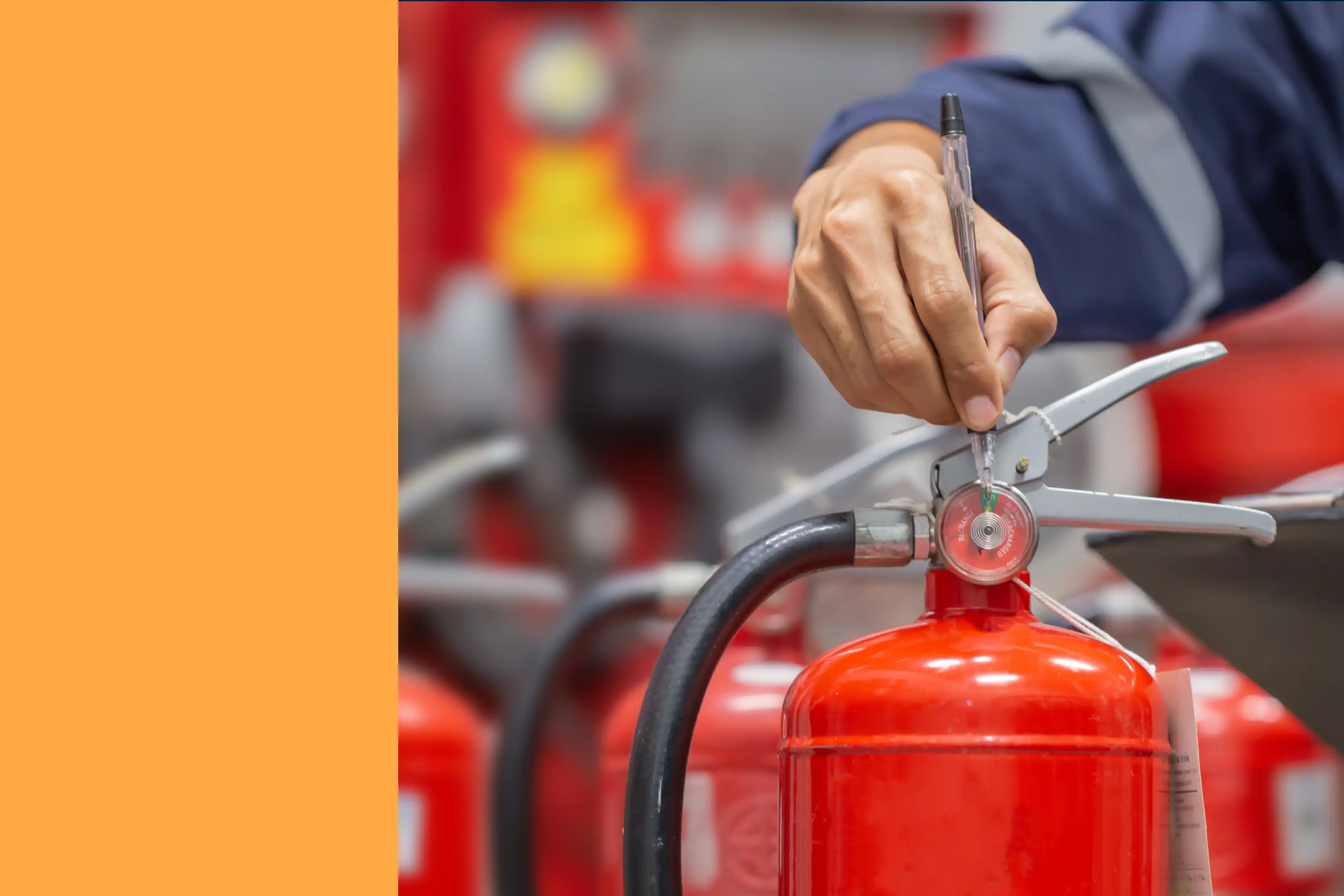
When a fire extinguisher doesn’t work the way it should, your safety, and your team’s, is at risk. Regular fire extinguisher inspections are your first line of defense against failure.
This monthly fire extinguisher checklist helps you catch common issues: low pressure, missing pins and tamper seals, blocked access, corrosion, and outdated service tags. Use it on its own or in a computerized maintenance management system (CMMS) to streamline and standardize routine inspections.
Key takeaways
- Monthly inspections protect readiness by catching common failures: low pressure, missing pins, blocked access, and corrosion.
- Obstructions and poor placement create accessibility gaps that add critical seconds during emergencies.
- Physical damage like dents, corrosion, or heat discoloration often signals internal issues that predict equipment failure.
- Digital tracking through a CMMS turns inspection data into operational intelligence about recurring failure patterns.
How to use this checklist
Customize for your facility
Treat this fire extinguisher checklist as a baseline for risk management and emergency preparedness. We’ve based it on NFPA 10, the National Fire Protection Association’s Standard for Portable Fire Extinguishers.
Adjust it as necessary, according to the specifics of your facility. Inspection procedures and extinguisher types may vary depending on company policy, fire type, or equipment. Things like locked rooms, high-traffic rooms, energized electrical panels, or flammable liquids all change your risk profile and should be accounted for in your checklist.
Use a CMMS
We’ve made our fire extinguisher inspection checklist available as a PDF so you can print it out or use it on a tablet. However, we recommend importing it into a computerized maintenance management system.
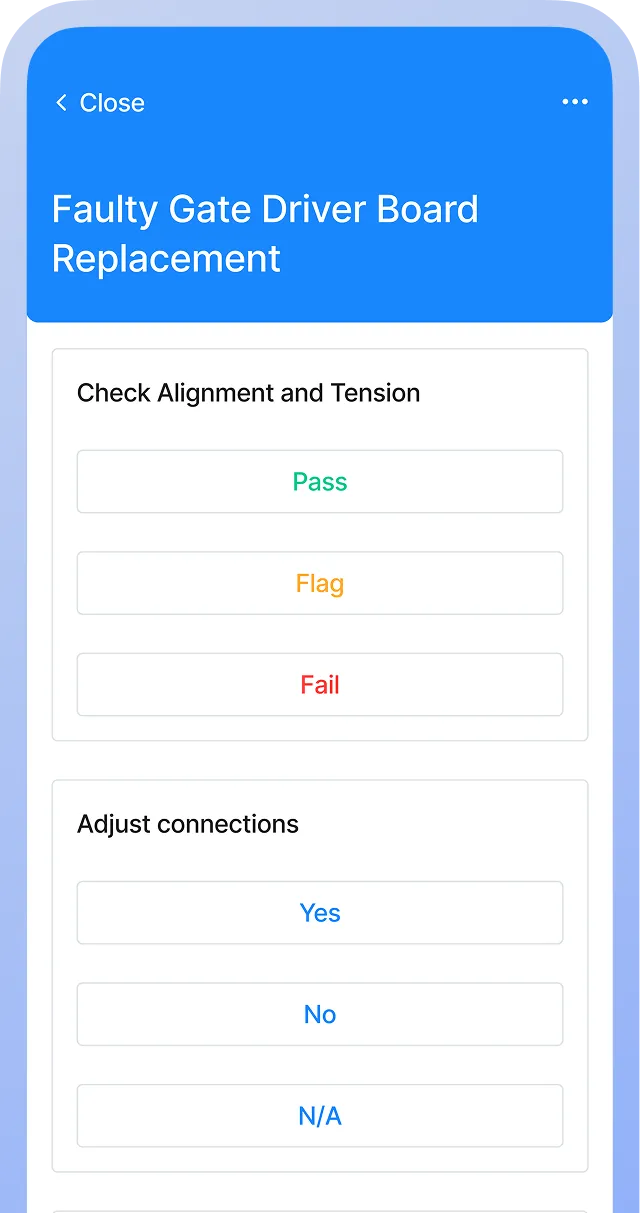
Using a CMMS helps you keep monthly extinguisher checks consistent across shifts and buildings. You can assign routes, set 30-day reminders, and require photos of gauge readings, broken seals, or obstructions. When a tech flags a deficiency, the system can create follow-up work orders and track completion.
The end result is greater confidence that problems are being addressed, and the peace of mind of knowing vital safety equipment is working the way it should.
Fire extinguisher inspection checklist
Pre-inspection preparation
Location and accessibility
Physical condition and integrity
Pressure and operational readiness
Labels, instructions, and markings
Mounting and installation
Corrective actions and follow-up
Documentation and compliance
This checklist is to be used only by those with appropriate training, expertise, and professional judgment. You are solely responsible for reviewing this checklist to ensure that it meets all professional standards and legal requirements, as well as your needs and intent.
Common fire extinguisher inspection failures and root causes
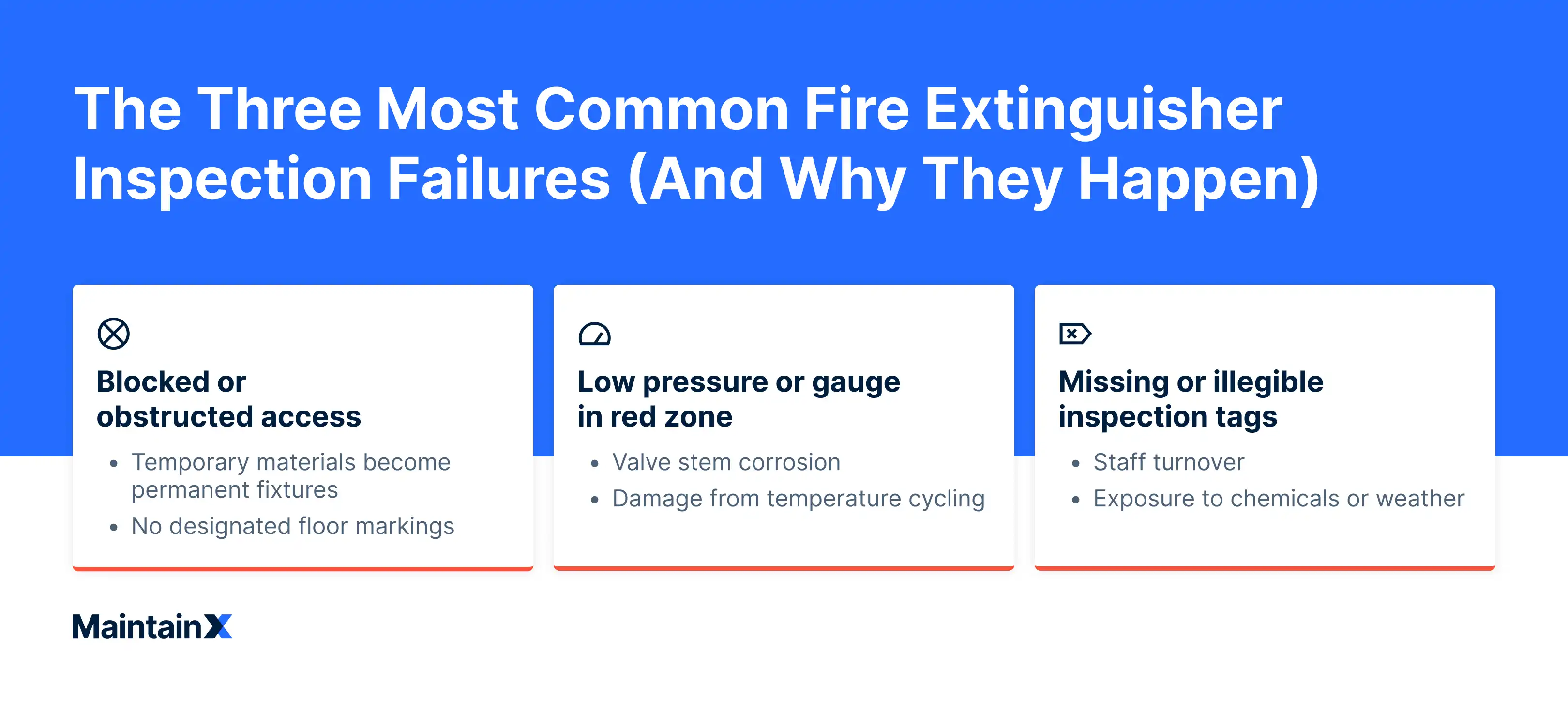
Most monthly failures fall into a few predictable categories: low pressure, corrosion, obstructions, and damaged tamper seals. The root cause usually lives upstream in placement and handling.
Low pressure often ties back to temperature swings from units placed near exterior doors, stored in mechanical rooms that run hot, or repeatedly handled during cleaning and line changes. Corrosion tends to show up in washdown areas, near chemical storage, or where condensation collects on exterior walls. Obstructions happen when teams treat extinguisher space as temporary staging, especially around shipping lanes, break rooms, and electrical rooms. Missing pins or broken tamper seals point to unnecessary handling, rough forklift traffic, or units mounted too low in busy corridors.
When you track these patterns by location, you can spot trends and adjust placement and inspection frequency accordingly.
How to build a fire extinguisher replacement and lifecycle strategy
Extinguisher readiness comes from managing the whole lifecycle, not just passing a monthly visual. Start with an asset list that includes extinguisher type, size, location, and service history. From there, align actions to triggers your team can spot: dents on the cylinder, repeated low readings, damaged threads at the valve, or chronic corrosion in a wet zone.
Plan for more frequent condition checks where vibration, washdowns, or outdoor exposure are expected. When an extinguisher gets discharged, even briefly, treat it as a maintenance event with a clear follow-up path for recharge or replacement. Rotating stock for seasonal areas and documenting relocations helps prevent gaps in coverage.
Digitize fire extinguisher inspections with a CMMS
Paper fire extinguisher inspection records tell you what happened at one point in time. A CMMS helps you see what keeps happening. With a mobile-friendly CMMS, teams can build monthly routes by zone and attach a standard checklist to each extinguisher asset.
Capturing photos of damage, whether it’s a corroded base ring, a blocked cabinet, or a gauge sitting low, removes guesswork from handoffs and makes remediation simpler. Over a few cycles, this and other data captured by the system give you operational intelligence about where your emergency readiness breaks down.
Get started with MaintainX
Visit our checklists and inspections page to learn more about how MaintainX helps standardize fire extinguisher inspections and other routine maintenance. Better yet, book a demo and see the platform in action.
Fire Extinguisher Checklist FAQs
What's the difference between monthly fire extinguisher inspections and annual maintenance?
Monthly inspections are quick, visual readiness checks by your team, while annual maintenance is a deeper service by a certified technician. Monthly inspections catch issues like blocked access, low pressure, or corrosion damage. Annual maintenance includes internal checks and service.
What are the five main types of fire extinguishers?
There are five primary types of fire extinguishers, each designed to put out different kinds of fires:
- Class A fire extinguishers are for use with ordinary materials like cloth, wood, and paper.
- Class B fire extinguishers are for use with combustible and flammable liquids like grease, gasoline, oil, and oil-based paints.
- Class C fire extinguishers are for use with electrical equipment like appliances, tools, or other equipment that is plugged into an outlet.
- Class D fire extinguishers are for use with flammable metals.
- Class K fire extinguishers are for use with vegetable oils, animal oils, and fats in cooking appliances.
Multipurpose fire extinguishers might be labeled “B-C” or “A-B-C” and can be used on most types of fires.
Who is qualified to perform monthly fire extinguisher inspections?
In most facilities, trained staff can handle monthly extinguisher inspections. These inspections typically involve spotting issues like missing pins, low gauge pressure, corrosion, or obstructed cabinets. Annual maintenance needs a qualified service provider.
How long should I keep fire extinguisher inspection records?
Keep fire extinguisher inspection records long enough to show consistent monthly coverage and support annual service history, typically at least 12 months, or longer if your insurer requires it. Inspectors need to document the exact location of the extinguisher, its serial number, manufacture and expiry dates, type, size, and rating.
Records of the monthly inspections need to be maintained by either putting an inspection tag or label on the extinguisher or by recording it on paper or electronic files. The inspector should sign and include the date on the fire extinguisher inspection checklist to confirm the completion of the inspection. In addition to maintaining compliance, keeping detailed information and records, such as inspection tags, labels, and other documentation, allows you to spot trends that could affect extinguisher performance and make adjustments accordingly.
What should I do if a fire extinguisher fails a monthly inspection?
Treat a failed extinguisher as a readiness gap and restore coverage fast.
Before pulling an extinguisher from service, inspectors should note its condition and confirm any deficiencies. Tag the unit clearly and ensure it is replaced promptly to maintain safety and compliance, especially if it’s in a high-risk area. Then either repair, recharge, or recycle the old unit as appropriate.
Can I use digital tools instead of paper tags for fire extinguisher inspections?
Yes, digital inspections work well because they’re easy to execute and create a verifiable audit trail. Digital fire extinguisher inspection checklists help inspectors document details and information, ensuring monthly and yearly checks are conducted and recorded with due diligence. A mobile checklist with photos and barcode scans reduces missed checks and helps supervisors review exceptions. In MaintainX, you can also tie findings to corrective work orders and SOPs.
What are the most common fire extinguisher inspection failures?
Accessibility issues are the most common type of fire extinguisher inspection failure. Inspections should check that the extinguisher is in its designated place, clearly marked, and located in an accessible position within the building. This includes blocked, missing, or improperly placed units, all of which slow response when seconds matter.
Inspectors should ensure there is no material stacked or debris in front of the extinguisher, and that the area is clear of any material or obstructions for quick access. The inspection should also confirm that the inspection tag is valid.
How do I integrate fire extinguisher inspections into my preventive maintenance schedule?
Fold extinguisher checks into the same PM routes your team already runs. Group by area and risk, not by asset type alone. Use the findings to trigger repairs and to flag hotspots for repeat failures.

The MaintainX team is made up of maintenance and manufacturing experts. They’re here to share industry knowledge, explain product features, and help workers get more done with MaintainX!

.webp)