
Multi-site Maintenance Management
Manage, standardize, and optimize maintenance at every site
Manage work, SOPs, parts, and reporting across all facilities so the right work gets done the right way, every time.












Our clients using MaintainX report
Build procedures once. Deploy them everywhere.
Create and update standardized maintenance procedures across all sites from a single source of truth. When something changes, every team sees it instantly. No printed binders, outdated checklists, or guesswork.
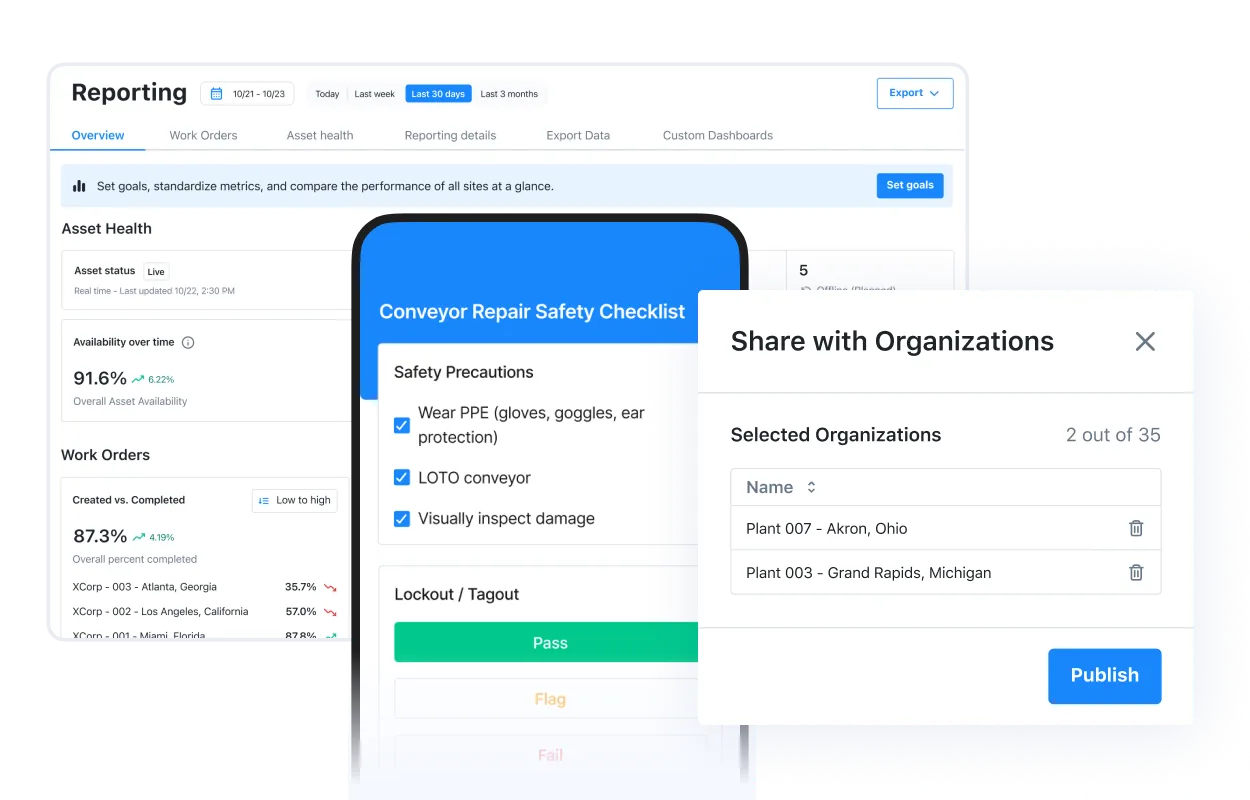
Make sure work is done the same way across every shift
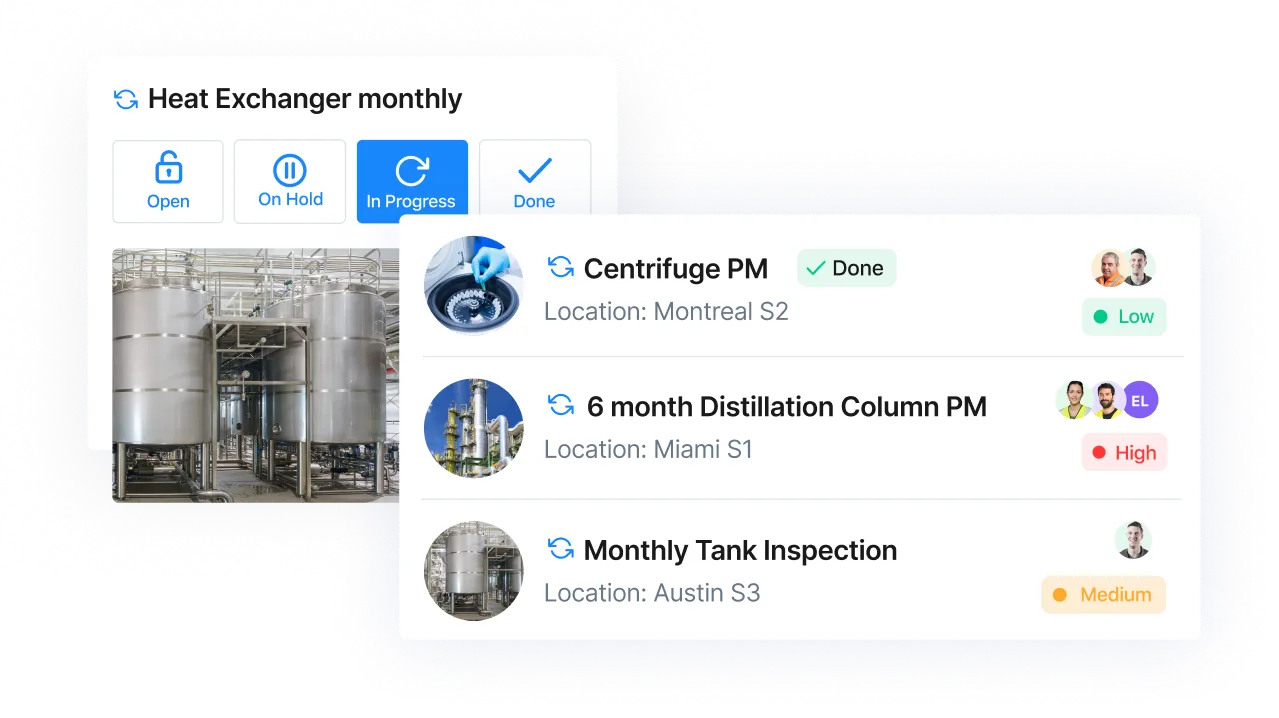
Create standardized work order templates, work request forms, checklists, and more to ensure consistency on every job.
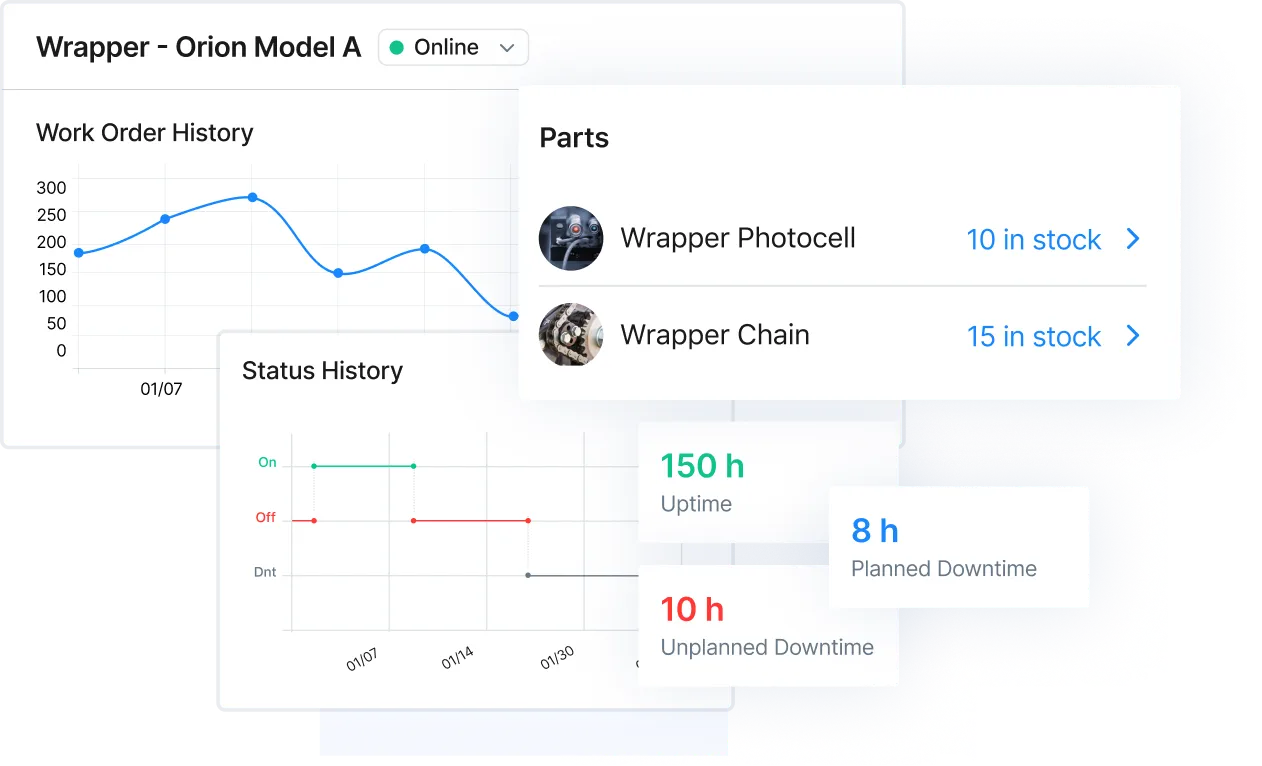
Align your PM program across facilities to increase uptime and throughput
Schedule preventive maintenance by time, usage, or condition and enforce it consistently across facilities. Track PM compliance in real time so you can spot red flags before they become breakdowns.
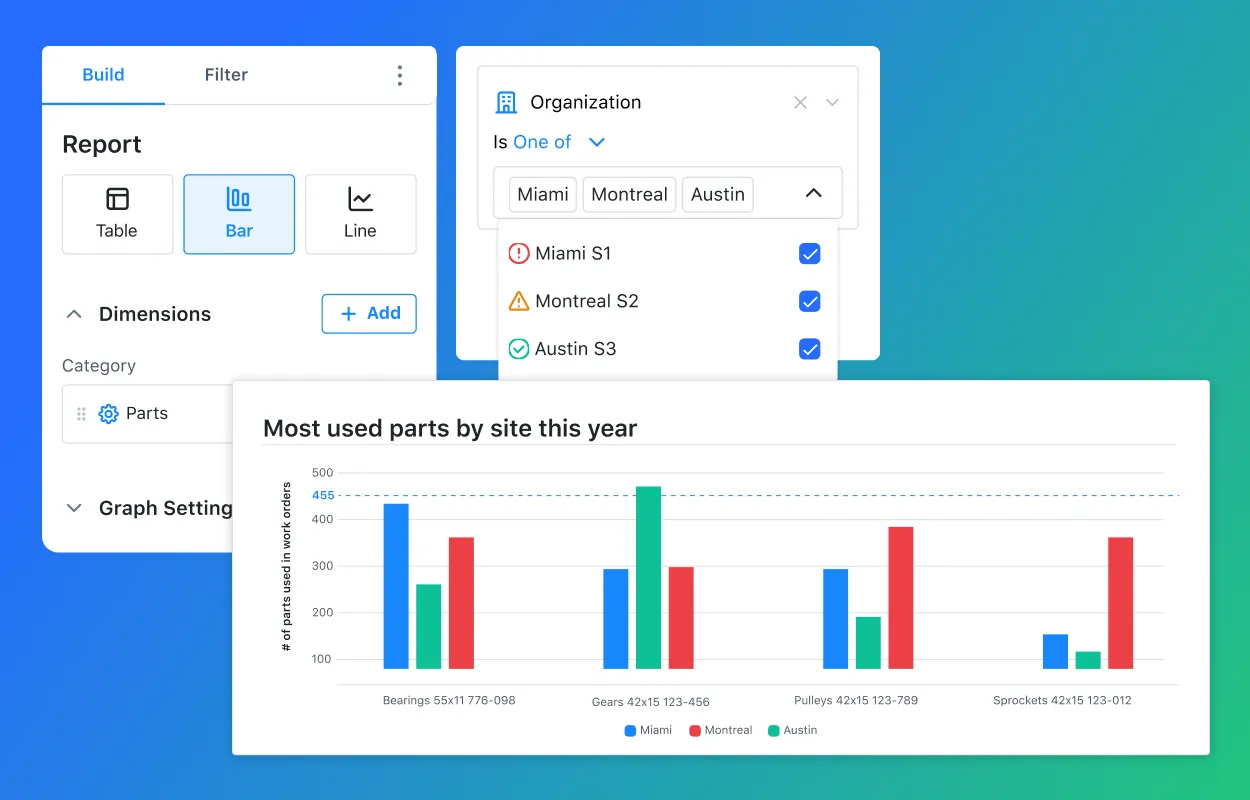
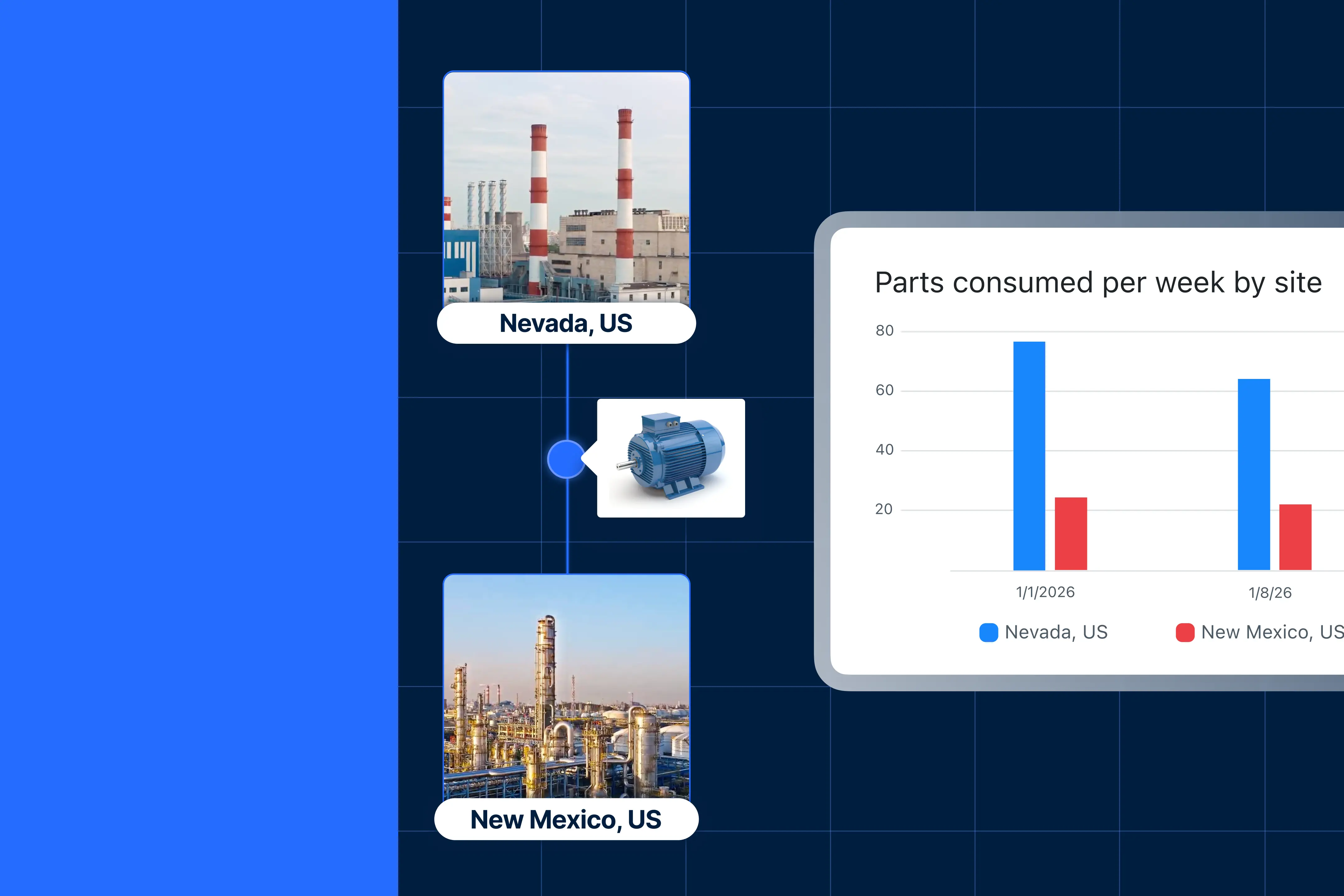
Compare performance across sites with a couple of clicks
Get a consolidated view of asset health, downtime causes, costs, MTTR, and more across sites. Identify which sites are leading, which are lagging, and why.
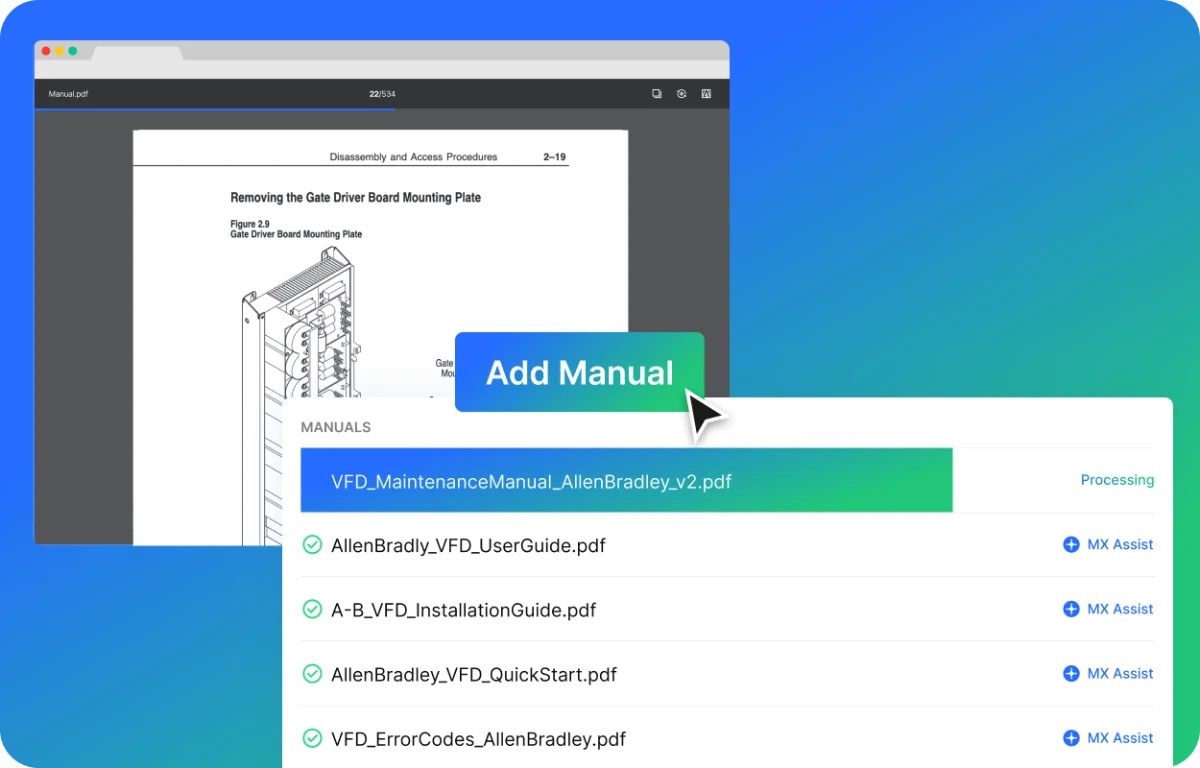
Give every technician instant access to knowledge from across your organization
Use AI embedded in your CMMS to scan asset manuals, work order histories, technician notes, and other data to generate real-time guidance for technicians. Capture the knowledge of your most experienced staff and make it available to everyone on the floor.
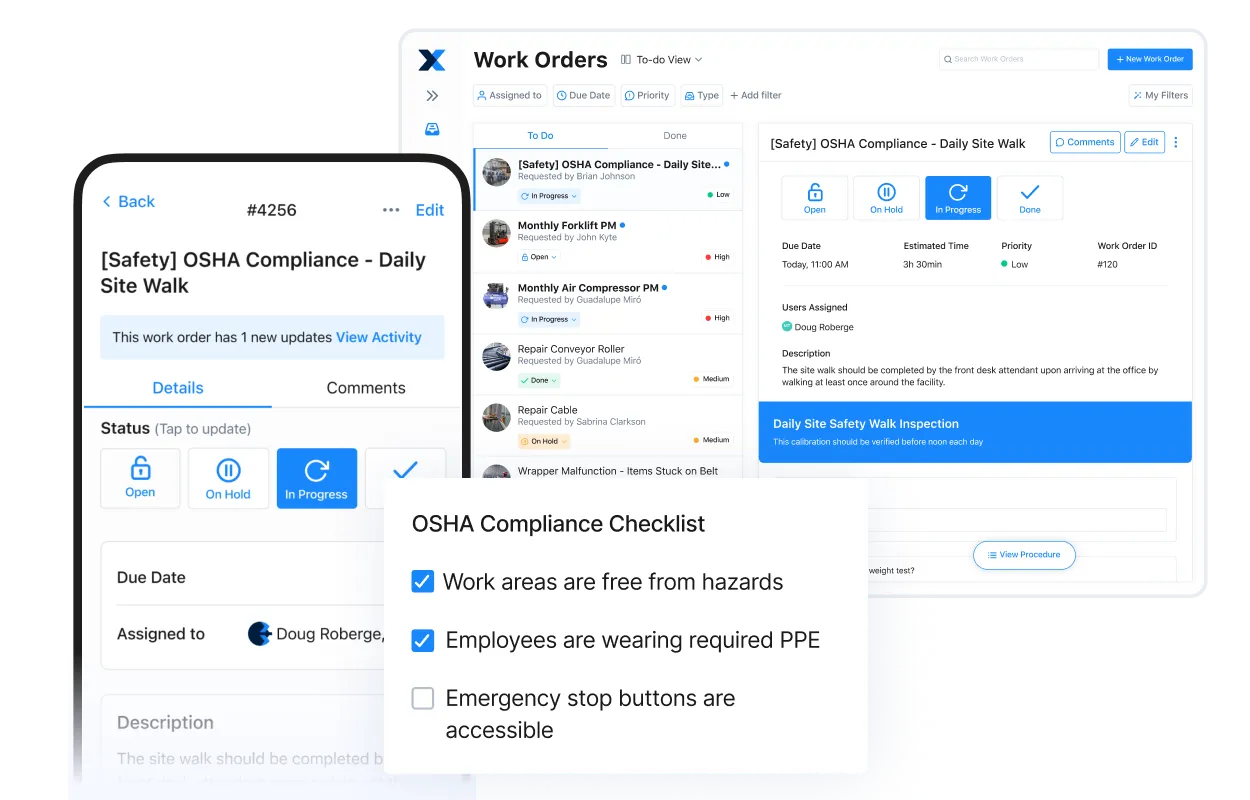
Complete every compliance task on time and get the data to prove it
Digital audit trails, mandatory data fields, and work order approval workflows ensure every site meets regulatory requirements without relying on manual data entry or memory.




.webp)

.png)
Award-winning software you can trust








See what customers have to say
MaintainX is the reason we have gone from an overall plant efficiency of 60% to over 95%.

MaintainX is a brilliant software that makes plant and asset maintenance scheduling and monitoring a breeze.
MaintainX has been a game changer for us. It has cut down significant time for our teams in communication and status of repairs.
Multi-site maintenance management FAQs
Got a question? We’ve got answers. Need troubleshooting help? Check out our Support Center.
Why is maintenance standardization important for multi-site operations?
Inconsistency is the default at many multi-site operations. Maintenance teams at each site develop their own habits, terminology, scheduling, and documentation practices. Over time, that variation makes it nearly impossible to compare performance across facilities, identify what's working, or roll out improvements at scale.
Maintenance standardization gives regional and enterprise leaders a foundation for consistency, like the same preventive maintenance intervals, procedures, work order categories, and KPIs. When you can measure performance against a shared standard, you can benchmark sites against each other, identify underperformers before they cause problems, and replicate maintenance processes from your best facilities across the other sites.
What's the difference between a maintenance procedure and a maintenance standard?
A maintenance procedure is a step-by-step instruction for completing a specific task. It's usually applied to routine tasks, like a monthly inspection on a centrifugal pump or replacing a belt on a conveyor system. It tells technicians exactly what to do, in what order, with what tools and safety precautions.
Asset management standards and maintenance standards are a broader set of specifications or requirements that define what "good" looks like. For example, that all centrifugal pumps must receive a monthly vibration check, or that all work orders must be closed within 24 hours of completion. Standards set the expectation. Procedures define how to meet it.
Strong maintenance programs need both. Standards without procedures create inconsistency in execution. Procedures without standards create inconsistency in scope — different teams decide for themselves what work matters.
What are global procedures in a CMMS?
Global procedures are standardized maintenance checklists, SOPs, and inspection forms that are created once and shared across multiple sites or facilities within a CMMS platform. When a global procedure is updated, the change is pushed to all connected organizations in real time, rather than requiring manual updates at each location.
Global procedures are especially valuable for multi-site operations because they eliminate the version control problem: different sites using different versions of the same maintenance plan or checklist, with some teams following outdated steps and others following revised ones. They also make it easier to roll out new safety requirements, regulatory updates, or process improvements enterprise-wide, without relying on individual site administrators to make the changes manually.
How do you standardize maintenance procedures across multiple facilities?
Standardizing maintenance procedures across facilities requires a combination of process design and technology. For maintenance leaders, The practical steps typically look like this:
- Audit current procedures. Identify what procedures and general guidelines each site already has, which are consistent, and where the gaps are.
- Define the gold standard. Work with experienced maintenance professionals and engineers to document best-practice procedures for your most critical assets and tasks.
- Build a centralized procedure library. Store all standardized procedures in a single system that all sites can access, ideally a CMMS with global procedure functionality.
- Assign and enforce. Link procedures to preventive maintenance schedules and work order types so that technicians follow the correct checklist for every task automatically.
- Measure compliance. Track whether procedures are being completed correctly by maintenance technicians, maintenance engineers, and other frontline staff, and use reporting tools to identify where steps are being skilled or where standards are being deviated from.
- Review and update continuously. Treat your procedure library as a living document. As equipment changes, failure modes evolve, or better practices emerge, update the library and push changes to all sites immediately.
How does maintenance standardization reduce unplanned downtime?
Unplanned downtime usually has predictable root causes: missed preventive maintenance, inconsistent inspection procedures, delayed responses to early warning signs, and poor parts availability. Maintenance standardization addresses each of these directly.
When preventive maintenance is standardized and tracked, fewer PMs are skipped or performed inconsistently, which means fewer equipment failures develop undetected. When inspection procedures are standardized, technicians know exactly what to look for and how to report abnormalities, which means early warning signs are more likely to be captured and acted on. When escalation protocols are standardized, the response to a developing failure is faster and more predictable.
Over time, a well-executed maintenance standardization program shifts the ratio of reactive maintenance to preventive maintenance, which is one of the clearest predictors of equipment performance, reliability, and uptime.
What are standardized job plans in maintenance management?
A standardized job plan is a pre-defined template for a recurring maintenance task that includes all the information needed to execute the work consistently. This includes the procedure steps, required parts, estimated labor time, safety precautions, required tools, and any supporting documentation. Rather than creating a new work order from scratch each time, technicians and planners use the job plan as a starting point.
Standardized job plans act as a sort of quality assurance or set of global standards to reduce variability, improve planning accuracy, and ensure that critical information isn't forgotten or omitted. They are especially valuable for high-frequency tasks, like lubrication rounds, filter changes, or monthly PM inspections, where consistency and speed both matter.
In MaintainX, standardized job plans are implemented through work order templates that can be pre-loaded with procedures, assets, assigned teams, and required parts.
What international standards relate to maintenance management?
Several international organizations provide international standards as frameworks for maintenance management practices. The most widely referenced include:
- ISO 55000 series (Asset Management): Provides decision making guidelines for the management of physical assets, including how maintenance programs should be designed, documented, and measured. Adopted by many organizations as industry standards for their maintenance teams and a framework for their maintenance strategy.
- ISO 9001 (Quality Management Systems): While not maintenance-specific, its documentation, corrective action, and process control requirements apply directly to maintenance operations in regulated industries.
- ISO 14224: Focuses on the collection and exchange of reliability and maintenance data for equipment. It's particularly relevant in oil and gas, but widely referenced for data standardization across industries.
- MIMOSA standards / OIIE standards: Open information standards for operations and maintenance that define how asset lifecycle data should be structured and exchanged between systems, supporting interoperable systems across enterprise environments.
- ANSI/TAPPI TIP standards: Industry-specific guidance for pulp and paper, covering equipment maintenance practices.
MaintainX supports compliance with these frameworks by providing structured data capture, documented procedures, digital audit trails, and reporting that meets the record-keeping and measurability requirements these standards specify.
How do you measure the success of a maintenance standardization program?
The effectiveness of a maintenance standardization program can be tracked through a combination of leading and lagging indicators:
Leading indicators (show whether the program is running correctly):
- PM compliance rate (% of planned PMs completed on time)
- Procedure completion rate (% of work orders closed with all required steps completed)
- Work order backlog size and age
- Mean time to respond to reactive work orders
Lagging indicators (show the business outcomes):
- Unplanned downtime frequency and duration
- Mean time between failures (MTBF)
- Mean time to repair (MTTR)
- Maintenance cost as a percentage of asset replacement value
- Ratio of reactive to planned maintenance
A well-run standardization program should show improving PM compliance and procedure adherence first. This should help organizations reduce downtime, increase throughput, improve efficiency, boost equipment reliability, and improve maintenance cost ratios after six to 12 months.
What is multi-site maintenance management?
Multi-site maintenance management is the practice of overseeing and coordinating maintenance operations across more than one facility, plant, or location from a unified organizational structure. It specifies requirements for how maintenance work is planned, executed, documented, and measured at each site, and how those efforts are aligned, compared, and improved at the regional or enterprise level.
Effective multi-site maintenance management requires more than just replicating what works at one location. It requires consistent standards and work plans that can be enforced across facilities with different equipment, different teams, and different operational histories. It also includes reporting infrastructure that leads to better decision making and allows maintenance leaders to see how standards are being met at every site without having to chase down individual plant managers for data.
How do you compare maintenance performance across multiple facilities?
Comparing maintenance performance across facilities requires consistent data, and consistent data requires consistent processes. If each site uses different work order categories, different PM naming conventions, or different methods for logging downtime, the numbers won't be comparable, even if they come from the same system.
The practical steps to enable meaningful cross-site benchmarking are:
- Standardize your data structure. Use global work order categories, asset naming conventions, and cost codes across all sites so that like-for-like comparisons are possible.
- Align on key metrics. Define the KPIs that matter most, like PM compliance rate, reactive vs. planned work ratio, MTBF, MTTR, cost per work order, and ensure every site tracks them the same way.
- Centralize reporting. Use a CMMS with global reporting capability that aggregates data across all facilities into a single dashboard, rather than pulling reports from each site and manually consolidating them.
- Review regularly. Establish a cadence, like monthly or quarterly, for reviewing cross-site performance, identifying outliers, and sharing best practices from high-performing facilities.
In MaintainX, Global Reporting provides this consolidated view automatically, with filters that let you drill down by site, asset type, work category, or time period.
How do you manage spare parts and inventory across multiple maintenance locations?
Managing spare parts across multiple maintenance locations requires balancing local availability, so technicians can get what they need quickly when equipment fails, against the cost of holding excess inventory at each site.
The most effective multi-location parts strategies include:
- Shared visibility: All sites can see what's stocked at every other location, so teams can source parts internally before placing an external order.
- Standardized part nomenclature: Parts are named and coded consistently across facilities so that searches and transfers work without ambiguity.
- Centralized min/max thresholds: Restocking triggers are set at the organizational level, not just the site level, so procurement teams can plan replenishment across the network rather than reacting to individual stockouts.
- Inventory transfer workflows: When one site has excess stock of a part that another site needs, the transfer can be initiated and tracked within the same system — maintaining accurate inventory counts at both locations.
MaintainX supports all of these through its Global Parts and Multi-Location Parts features, which give parts leaders and maintenance planners a unified view of inventory across the enterprise.