

Key takeaways
For many teams, CMMS implementation means switching from paper logs and spreadsheets to digital workflows. Success depends on thorough planning, clean data migration, and strong user adoption strategies.
- A smooth implementation starts by assessing current maintenance practices, setting clear objectives, and creating a detailed timeline with your team.
- Ensure your asset and maintenance data is accurate and standardized before migration to build a reliable foundation for your new system.
- Drive user adoption by forming a dedicated implementation team, securing management commitment, and providing comprehensive training.
- Start with a pilot program to identify potential issues on a small scale.
- Establish and continuously measure key performance indicators (KPIs) to track progress and demonstrate the system’s value.


There's a reason most employment contracts include a probation period: the first few months of any job are the most critical. During this time, a new employee learns the challenges they'll be facing every day and proves that they'll be able to overcome them.
The first few weeks of introducing a Computerized Maintenance Management System (CMMS) are similar. The software has to prove itself to the team (and the maintenance manager responsible for the team’s success).
In this guide, you’ll see how to ensure your CMMS implementation sets your team up to reach its goals.
Benefits of implementing a CMMS
CMMS implementation transforms maintenance operations across manufacturing, logistics, and other asset-intensive industries by giving teams one central system to work from.
Our 2026 State of Industrial Maintenance report showed that companies who evolve their maintenance strategy through CMMS implementation:
- Reduced costs through better resource management. On average, companies reduce overtime costs by 25% in the first year of using a CMMS.
- Reduced unplanned downtime by 32%. CMMS/EAM implementation ranked among the top three ways teams are reducing downtime costs today.
- Improved inventory control. Teams reduced parts inventory costs by an average of 30% by using a CMMS to improve their parts inventory management.
Now that you know what to look forward to, let's start planning your implementation.


How to plan a successful CMMS implementation
Getting the most from your CMMS comes down to smart implementation. Here's how to plan it right.
Accurately assess current maintenance practices
Before you can figure out how to get where you're going, you need to know where you're starting from. What does your current maintenance strategy look like? Is it mostly reactive, or do you have preventive maintenance (PM) schedules in place? What's your work order completion rate? How does your team record and execute maintenance requests?
Set clear objectives and key performance indicators
A CMMS can overhaul how you handle maintenance, but pick a few specific goals with measurable KPIs to avoid getting overwhelmed. If your biggest worry is unexpected equipment failures at your manufacturing facility with 50+ assets, your objective could be introducing a proactive maintenance strategy for critical production equipment. In this case, your KPIs could be preventive maintenance completion rates and equipment failures for those assets.
Create a detailed implementation timeline
Without a timeline, reactive cycles swallow up even the best intentions. Clearly outline time-bound milestones in your maintenance management system implementation plan. Include items like "completing onboarding training" and "completing and executing 100% of work orders through the system." This will help everyone stay accountable.
Form a dedicated CMMS implementation team
Maintenance software implementations fail without a village to drive the process. Beyond maintenance managers, there should be champions within each team to encourage system usage.
For example, a maintenance manager could assign one champion per shift to ensure coverage. These champions would become the go-to resources for their peers’ questions, concerns, and suggestions.
Secure management commitment
You'll need executive support to keep a CMMS implementation moving along. Having a leader on your side who can understand growing pains and support process changes is essential.
How to choose the right CMMS
Find the right vendor for your operation
Choosing the right CMMS vendor takes time. (Just ask the Syracuse Glass Company team, who tried 15 different maintenance management solutions before deciding on MaintainX.)
The following key features can guide your decision, but your preferences may vary depending on your company size and the goals you want to achieve.
CMMS features for manufacturing facilities
At a minimum, a maintenance management system should provide:
- Preventive maintenance scheduling. The system should help teams efficiently schedule and complete preventive maintenance tasks. This is a cornerstone of evolving your maintenance and asset management strategy.
- Work order management. A good CMMS allows teams to easily create, assign, prioritize, and complete maintenance requests.
- Asset tracking and management. When maintenance teams can access asset information and data easily, they improve reliability and uptime.
- Inventory management. A CMMS helps teams stay ahead of stockouts with an easy way to manage, track, and purchase spare parts.
- Reporting and analytics. The ability to access reports and track KPIs allows managers to assess and improve maintenance strategies over time.
- Mobile accessibility. A smartphone-accessible maintenance system lets maintenance workers access asset and work order information in the field, which increases productivity and the accuracy of the data they record.
The CMMS implementation process
The great news about implementing a maintenance management system is if you find the right solution, you only need to do it once.
Here's what the maintenance software implementation process typically looks like:
1. Data gathering and migration
First, maintenance teams need to gather all asset and maintenance data currently in use, whether it's in Excel files, a different maintenance platform, or stacks of paperwork. Teams then standardize, map, and begin the data migration process. Clean, accurate data is non-negotiable.
2. System configuration and customization
Each team will have slightly different needs with their maintenance management platform. Working closely with an implementation specialist to configure and customize your system will help your maintenance team do their best work every day.
3. Integration with existing software
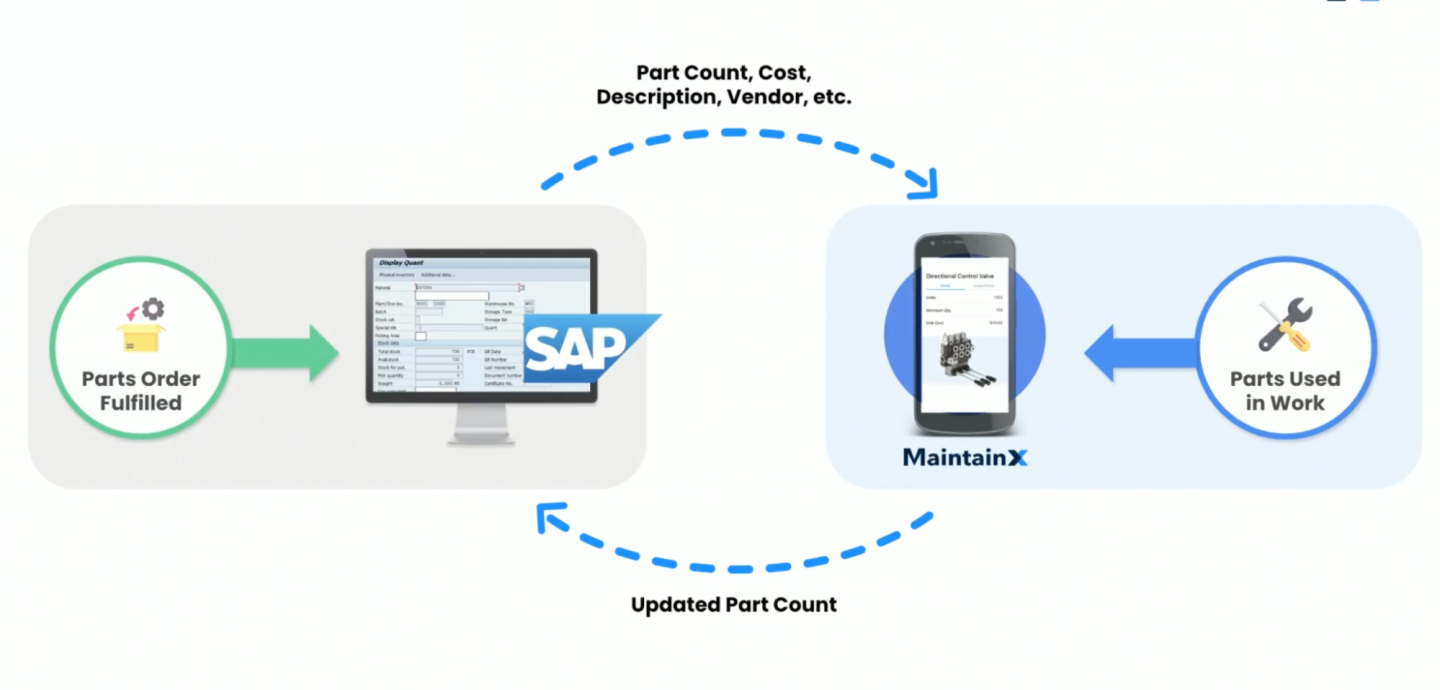
Your CMMS works best when it talks to your other business systems. Integrating with enterprise resource planning (ERP) software, fleet maintenance software, accounting systems, and other automation tools helps you maximize operational capabilities. Check out what the MaintainX implementation process looked like for the Suominen team, who needed to integrate it with SAP ECC, their system of record for parts inventory and purchasing data,
4. User training and adoption strategies
Solid training and a clear adoption strategy will make or break your maintenance management system rollout. Change can be difficult, but providing your team with the information and accountability systems they need is the only way to guarantee success and continuous improvement. Proper training enables the kind of rapid adoption that allowed Cintas to roll out across 200 sites in just 9 weeks.
5. Testing and quality assurance
The road to implementation in your facility should have many checkpoints. Building testing and quality assurance into your rollout strategy ensures the system captures all data, tasks, workflows, and analytics properly.
Overcoming common CMMS implementation challenges
Failed CMMS implementations are frustrating and expensive. Here's how to avoid the most common roadblocks.
Inaccurate data
As we mentioned earlier, ensuring your data is consistent and error-free before beginning the data migration process is critical. Cleaning data can be tedious, but it's worth going through everything with a fine-tooth comb to verify naming conventions and asset history accuracy. Going back and fixing these issues retroactively will be a much bigger headache than getting it right the first time.
Resistance to change
Getting everyone on board with a sweeping change can be difficult, even one that improves their day-to-day lives. Clear communication about what's changing and when it prevents confusion and resistance. Well-trained maintenance software champions address resistance within their team directly.
High implementation costs
Any major plan that impacts daily workflows becomes costly if you don't execute it well. Setting up an implementation plan with clear milestones tied to dates and accountable people is crucial. Partnering with an implementation specialist helps prevent technical hiccups, ensuring minimal downtime during the implementation process.
Losing momentum
We've all been in situations where a plan that excited everyone loses steam over time. Building accountability into your plan is your best bet. This means clearly communicating completion requirements by specific dates and sticking to that plan. Complete training for employees ensures people use the maintenance management system as intended.
Best practices for successful CMMS implementation
- Start with a pilot program. We know you're eager to roll out a maintenance management system as quickly as possible, but it’s wise to start with a pilot program. A smaller-scale test run helps you identify issues, plan for contingencies, and tailor your training plan for the big rollout.
- Focus on user engagement and training. Enthusiastic, well-trained employees will drive your implementation success. Focus on usability in your training, and make sure you have internal champions who can regularly check in with your teams about the process.
- Continuously gather feedback. A maintenance management platform should be easy to use. Meet with your team frequently to gather feedback that can help you improve the system.
Measuring CMMS success
Your KPIs for a new CMMS should relate to the goals and objectives you defined at the start of implementation. These should address the main challenges you faced before adopting a maintenance management platform.
For example, Wauseon Machine knew they were overspending on inventory before finding MaintainX. By focusing on inventory management in their implementation, they now closely track inventory spend, saving $60,000 annually.
Your implementation specialist can help you define the right goals at the outset and show you how to track them over time.
The final word on CMMS implementation success
How you implement your CMMS determines whether it becomes a game-changer or just another system to manage. Often, the difference between success and failure comes down to choosing a vendor committed to your team's success.
At MaintainX, our mission is simple: one platform for maintenance, repair, and operations to keep the physical world running. We support our customers on their implementation journey with dedicated specialists who understand the unique challenges of asset-intensive industries.
If you’re ready to transform your maintenance operations, sign up for free and experience why customers trust MaintainX to reduce downtime and boost production capacity.
CMMS implementation FAQs
What is CMMS implementation for manufacturing facilities?
CMMS implementation is the process of deploying maintenance management software to centralize work orders, asset tracking, and preventive maintenance scheduling. For manufacturing facilities, this means replacing paper-based maintenance logs with digital workflows that reduce unplanned downtime and improve equipment reliability.
How long does CMMS implementation typically take in industrial settings?
Implementation timelines vary based on facility complexity and data quality, but most single-site deployments complete within a few weeks with clean data. Multi-site manufacturing operations may require several months for comprehensive rollouts across all locations.
What are the most common CMMS implementation challenges for maintenance teams?
Maintenance teams typically face three main challenges: inaccurate asset data from legacy systems, technician resistance to new workflows, and maintaining project momentum. Addressing these through data cleanup, comprehensive training, and clear accountability measures ensures smoother adoption.
How much does CMMS implementation cost for mid-size manufacturing operations?
Implementation costs depend on software licensing, user count, and professional services for data migration and training. Cloud-based maintenance management platforms typically offer lower upfront costs than legacy on-premise systems, with companies often realizing return on investment (ROI) through reduced downtime and maintenance costs.
What team roles are essential for successful CMMS implementation?
Essential roles include a maintenance manager as project lead, an executive sponsor for high-level support, site champions from your maintenance crew, and an information technology (IT) contact for system integrations. This team structure ensures both technical execution and organizational buy-in throughout the implementation process.

Senior Content Writer, MaintainX




.webp)